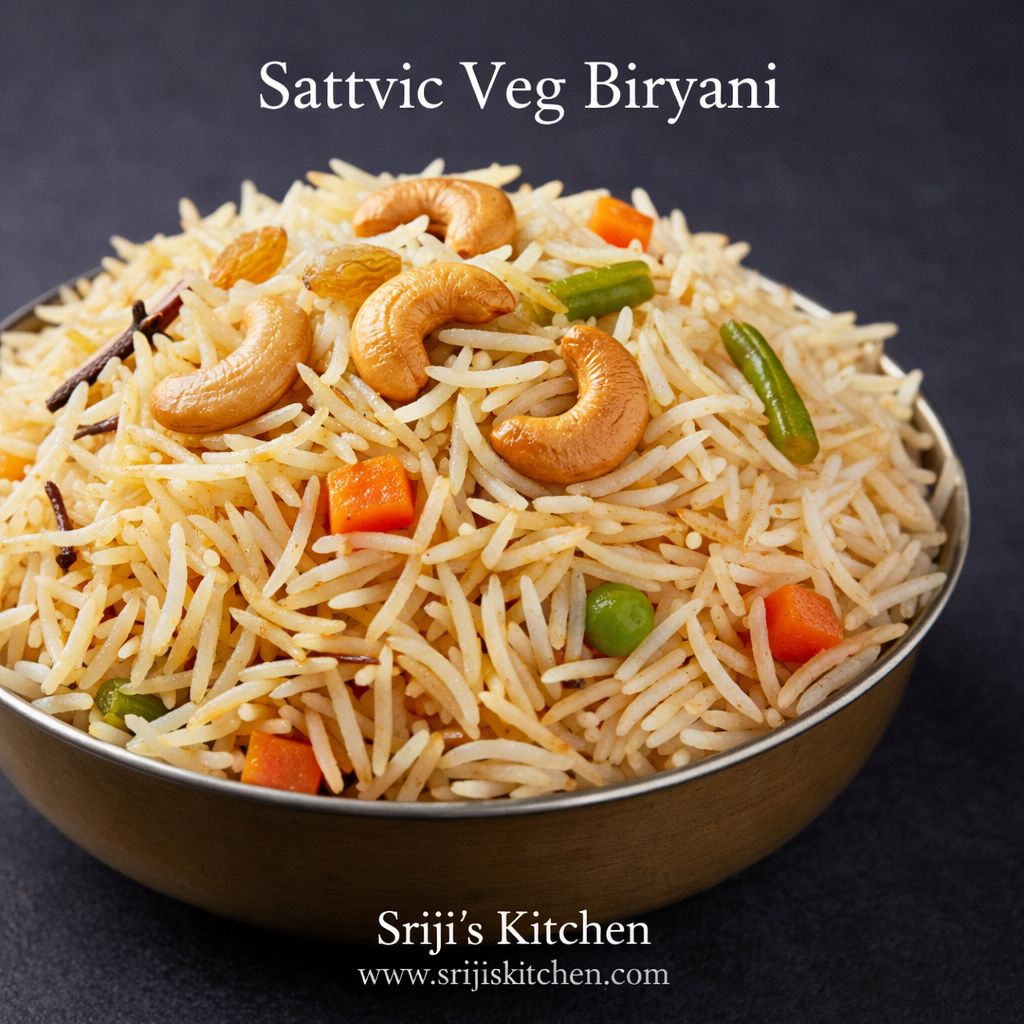
Sattvic Veg Biryani
(No Onion, No Garlic)
A celebratory rice dish that can be offered as naivedyam !
This veg biryani is not a traditional temple preparation, yet it fits beautifully into a home-naivedyam context – especially on festival days, special tithis, or when offering a complete one-pot meal.
By replacing onion and garlic with gentle aromatics and whole spices, the dish remains sattvic while retaining depth, fragrance, and grace.
Ingredients
Makes about 3–4 servings
For the rice
-
1½ cups basmati rice
-
Water for soaking and cooking
Vegetables
-
1 cup mixed vegetables (carrot, beans, peas, cauliflower)
-
½ cup diced potato (optional but traditional for body)
Whole spices
-
2 bay leaves
-
4 green cardamom
-
1 small cinnamon stick
-
4–5 cloves
-
1 tsp cumin seeds
Aromatics & flavour
-
2 tbsp ghee
-
1 tsp ginger paste
-
2 green chillies, slit
-
¼ tsp turmeric powder
-
1½ tsp biryani masala (sattvic, no onion/garlic)
-
Salt to taste
Herbs & enrichment
-
¼ cup thick fresh curd (room temperature)
-
2 tbsp chopped coriander leaves
-
1 tbsp chopped mint leaves
Finishing
-
A pinch of saffron soaked in warm milk or
-
1 tsp rose water / kewra water (optional)
Method
-
(Heat control is intentional—this keeps flavours calm and rice intact)
-
Wash and soak the rice for 20–30 minutes. Drain and set aside.
-
Turn the heat on to medium.
Heat ghee in a heavy-bottomed pan or pressure cooker. -
Add whole spices (bay leaf, cardamom, cinnamon, cloves, cumin).
Sauté gently on low–medium heat until aromatic—do not brown. -
Add ginger paste and green chillies.
Sauté on low heat for 30–40 seconds until the raw smell disappears. -
Add vegetables and potatoes.
Increase to medium heat, mix well, and sauté for 2–3 minutes. -
Add turmeric and biryani masala.
Stir gently, then lower the heat. -
Turn the heat off.
Add curd and mix calmly so it doesn’t split. -
Add drained rice and salt.
Mix once, gently, coating the grains without breaking them. -
Add water (about 2½–2¾ cups).
Turn the heat back to medium, bring to a gentle boil. -
Cover and cook on low heat until rice is done and water absorbed
(or pressure cook for 1 whistle on low, then rest). -
Turn off the heat.
Sprinkle saffron milk or rose/kewra water, chopped mint and coriander.
Cover and allow the biryani to rest for 5–10 minutes before opening.
-
Naivedyam
Though not a traditional temple preparation, this veg biryani is suitable for home naivedyam, especially on festival days or special family occasions.
Prepare and offer it with a calm mind, keep it covered and undisturbed for a few minutes, and serve only after offering.
Notes, Tips & Variations
-
Use good-quality basmati rice with long, intact grains for the best texture.
-
Keep vegetables minimal and evenly cut so the rice remains the focus.
-
Always add curd or finishing aromatics after turning off the heat to maintain a sattvic flavour profile.
-
For a milder version, reduce green chillies and rely more on whole spices for aroma.
-
A small pinch of saffron soaked in warm milk can be added at the end for festive occasions.
-
This biryani pairs well with plain curd, pachadi, or a light vegetable kootu.
Why this method works
This method keeps the rice light, separate, and aromatic while allowing the vegetables and spices to blend gently without overpowering the dish. Whole spices bloom softly in ghee, giving depth without the use of onion.
Curd is added after switching off the heat, keeping the flavour mild and sattvic. A short resting period allows the aromas to settle, which is especially important when the dish is prepared as naivedyam.
Common mistakes to avoid
- Over-roasting spices (creates sharpness unsuitable for offering)
- Adding curd on high heat (causes splitting)
- Over-mixing after rice is added
Make-ahead / storage note
-
This biryani can be prepared a few hours in advance and kept covered at room temperature until offering.
-
If needed, refrigerate after it has fully cooled and reheat gently with a sprinkle of water to restore softness.
-
Avoid repeated reheating, as it dulls aroma and dries the rice.
Consistency cues (what to expect)
-
Rice grains should be long, separate, and lightly glossy
-
Aroma should be fragrant, not sharp or overpowering
Cultural / prasādam context
This biryani is ideal when offering a complete meal- especially on festival days, Ekādaśī-adjacent feasts (when allowed), or family celebrations.
Offer it warm, covered, and undisturbed for a few minutes before serving.