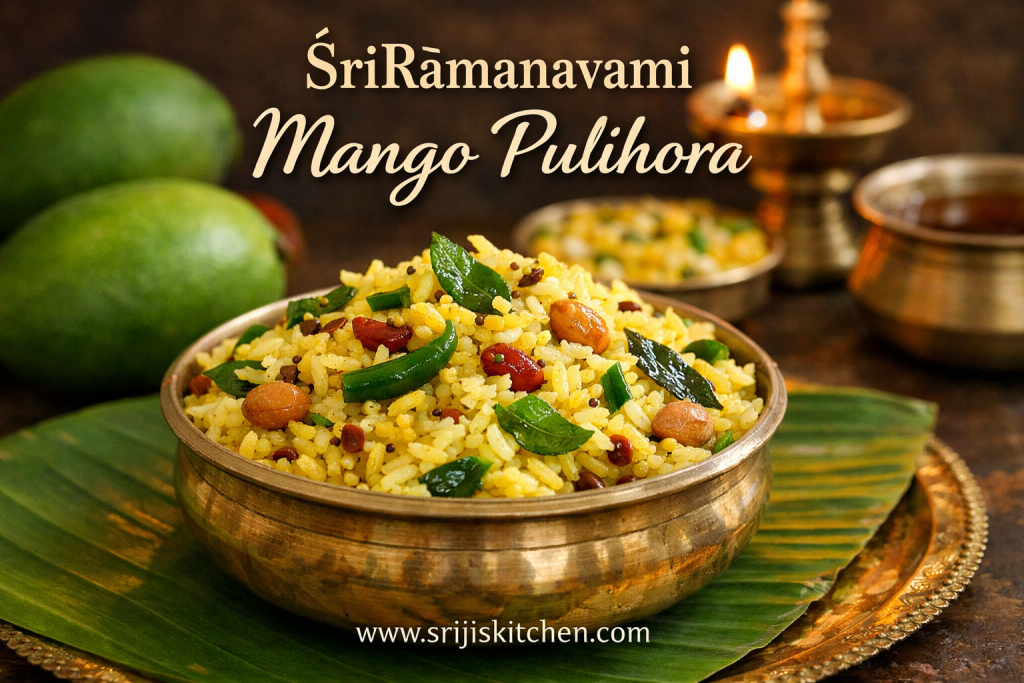
ŚrīRāmanavami Mango Pulihora (Raw Mango Rice)
(No Onion, No Garlic)
A light, tangy rice preparation made with raw mango, perfect for warm-season naivedyam.
Mango Pulihora is a simple and refreshing rice dish prepared using raw mango, making it especially suited for ŚrīRāmanavami, which falls during the warmer months. Its gentle tang, mild spice, and light texture make it both satisfying and easy to digest.
Prepared in many homes across Andhra and South India, this dish reflects the seasonal wisdom of using raw mangoes at their peak. It is commonly offered as naivedyam along with panakam, vadapappu, and other cooling preparations.
Ingredients
Makes about 3–4 servings
- 1 cup raw rice
- 1 medium raw mango (grated)
- 2 tbsp oil (preferably sesame oil)
- 1 tsp mustard seeds
- 1 tsp chana dal
- 1 tsp urad dal
- 8–10 peanuts
- 2 green chillies (slit)
- 1 dried red chilli
- 1 sprig curry leaves
- 1/4 tsp turmeric powder
- Salt to taste
Method
- Cook the rice with water, spread it on a plate, and allow it to cool completely. The grains should be separate and not sticky.
- Heat oil in a pan on medium heat. Add mustard seeds and let them splutter.
- Add chana dal, urad dal, and peanuts. Fry on medium heat until they turn golden.
- Add green chillies, dried red chilli, and curry leaves. Sauté briefly.
- Lower the heat to low, then add turmeric powder and the grated raw mango. Mix gently and cook for about 1–2 minutes. Do not overcook the mango.
- Turn off the heat. Add salt and mix.
- Add the cooled rice to the pan and gently combine until the rice is evenly coated.
- Let it rest for a few minutes before serving, allowing the flavours to settle.
Naivedyam
Notes, Tips & Variations
- Use slightly firm, sour raw mango for the best flavour
- Do not mix rice while hot, as it can become mushy
- Sesame oil enhances both flavour and authenticity
- Adjust chillies to keep the dish mild and sattvic
- A small pinch of hing (optional) can be added for aroma
Why this method works
Cooling the rice and lightly cooking the mango preserves both texture and freshness, giving a balanced and sattvic result.
Common mistakes to avoid
- Mixing rice while still hot
- Overcooking the raw mango
- Adding too much turmeric or oil
- Making the dish overly sour or spicy
Make-ahead / storage note
- Can be prepared a few hours ahead and kept at room temperature
- Avoid refrigeration immediately after preparation, as it dulls flavour
- Best consumed the same day
Consistency cues (what to expect)
The rice should remain separate, lightly coated with oil and mango, with a gentle tang and mild spice. It should not be sticky, overly sour, or heavily spiced.
Cultural / prasādam context
Mango Pulihora reflects the seasonal simplicity associated with ŚrīRāmanavami. The use of raw mango brings a natural cooling quality, aligning with the climate and the sattvic nature of the offering. It is widely prepared in South Indian homes and temples during this time.
Looking for more ideas? See this guide on what naivedyams can be offered for ŚrīRāmanavami.