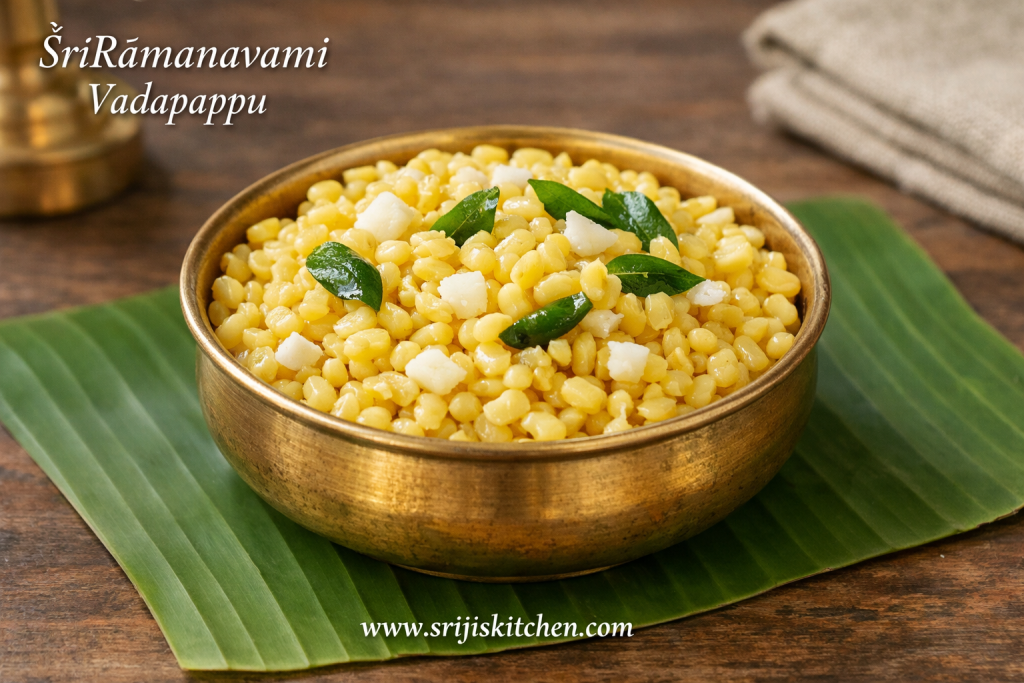
ŚrīRāmanavami Vadapappu (Soaked Moong Dal Salad)
A simple, fresh, and sattvic offering made with soaked moong dal, traditionally prepared for ŚrīRāmanavami.
Vadapappu is one of the simplest and most traditional offerings prepared for ŚrīRāmanavami. Made with soaked moong dal and a few fresh ingredients, it reflects the quiet, sattvic nature of the festival and the warm season in which it is observed.
Unlike cooked dishes, Vadapappu is prepared without heat, keeping it light, fresh, and easy to digest. It is commonly offered alongside ŚrīRāmanavami Panakam (Jaggery drink), ŚrīRāmanavami Mango Pulihora (Raw Mango Rice) and other seasonal naivedyams, forming a balanced and meaningful part of the celebration.
Ingredients
Makes about 3 servings
- 1 cup split yellow moong dal (pesara pappu)
- 2 to 3 tablespoons fresh coconut pieces (small chopped)
- 1 small green chilli (optional, finely chopped or whole)
- 6 to 8 curry leaves (roughly torn)
- Salt to taste
- 1 to 2 teaspoons lemon juice (optional)
Method
- Rinse the moong dal well 2 to 3 times until the water runs clear.
- Soak the dal in enough water for about 1 to 1.5 hours. It should soften slightly but still hold its shape.
- Drain the water completely and transfer the soaked dal to a bowl.
- Add chopped coconut pieces, green chilli (if using), and curry leaves.
- Add salt and mix gently.
- Add lemon juice if using and mix lightly.
- Offer as naivedyam fresh.
Naivedyam
Vadapappu is traditionally offered as naivedyam during ŚrīRāmanavami, often alongside Panakam and other simple seasonal preparations. Its freshness, lightness, and minimal processing make it especially suitable for offering during warmer months.
Since it is not cooked, it is best prepared fresh and offered immediately. Keep the preparation simple and sattvic, without heavy seasoning or tempering, allowing the natural taste of the ingredients to remain the focus.
Notes, Tips & Variations
- Keep the dal slightly firm. It should not become mushy.
- Coconut adds freshness and texture. Do not skip if possible.
- Green chilli can be skipped for a milder, more traditional naivedyam version.
- Lemon juice is optional and can be omitted in some traditional preparations.
- No tempering is needed. Keep it simple and light.
Why this method works
- Soaking softens the dal just enough to make it easy to digest while retaining texture.
- Minimal ingredients keep the preparation sattvic and suitable for naivedyam.
Common mistakes to avoid
- Over-soaking the dal
Soaking for too long makes the dal overly soft and slightly mushy instead of fresh and firm. - Using the dal without draining properly
Excess water makes the preparation wet and dull in taste. Always drain completely. - Making it too spicy
Vadapappu is meant to be mild and sattvic. Keep chilli minimal or skip entirely. - Skipping coconut
Coconut adds both texture and freshness. Without it, the dish can feel flat. - Adding tempering
This is not a cooked or seasoned dish. Avoid mustard seeds, oil, or heavy seasoning. - Preparing too early
Vadapappu tastes best when fresh. Making it too far in advance reduces its lightness and texture.
Make-ahead / storage note
- Best prepared fresh and offered immediately.
- Can be kept for a few hours at room temperature in cool weather.
- Avoid storing for long as freshness is key to this dish.
Consistency cues (what to expect)
- The dal should be soft when pressed but not broken or mushy.
- The final mixture should feel light, fresh, and slightly moist, not wet.
Cultural / prasādam context
Vadapappu is one of the most traditional offerings for ŚrīRāmanavami, often paired with Mango Pulihora, Panakam. Its simplicity reflects the calm, sattvic nature of the festival and the warm season in which it is observed. It is also commonly served along with dishes like Pulihora, Curd Rice, and Medu Vada as part of a simple festive spread.
Looking for more ideas? See this guide on what naivedyams can be offered for ŚrīRāmanavami.