Shira (Suji Halwa)
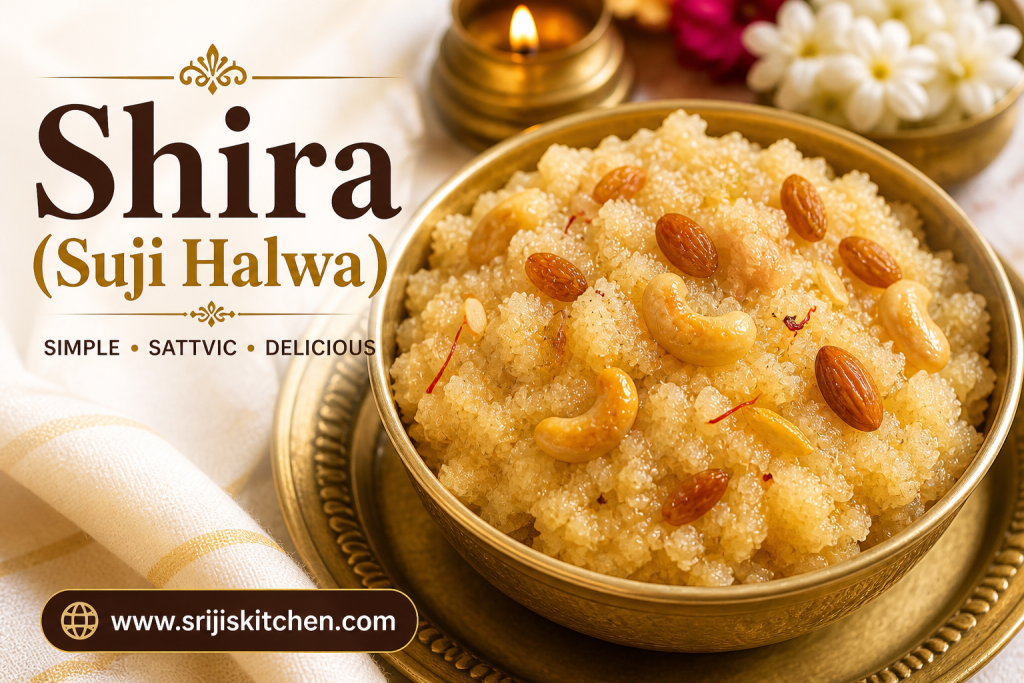
Shira, also known as Suji Halwa, is a simple and comforting sweet prepared in many homes across India and beyond. Made with gently roasted semolina, pure ghee, and naturally sweetened milk or water, this dish is valued for its warmth, simplicity, and gentle character. Prepared without onion or garlic and often cooked for festivals, special occasions, or quiet everyday moments, Shira reflects a style of cooking that is mindful, restrained, and quietly rooted in tradition.
Unlike milk-based sweets like navara rice jaggery payasam, Shira is quicker to prepare and uses minimal ingredients.
Ingredients
Makes about 3–4 servings
Rava / Suji (fine semolina) – ½ cup
Ghee – ¼ cup
Sugar – ½ cup
Water – 1¼ cups
Cardamom powder – ¼ tsp
Cashews – 1 tbsp (broken)
Raisins – 1 tbsp
Method
Heat a heavy-bottomed pan on low flame and add the ghee.
Add cashews and fry until light golden; remove and keep aside. Add raisins, fry until they puff up; remove and keep aside.
In the same pan, add the rava and roast on low flame, stirring continuously, until aromatic and lightly golden.
Meanwhile, bring the water to a gentle boil in a separate vessel.
Lower the flame and slowly add the hot water to the roasted rava, stirring continuously to avoid lumps.
Cook on low flame until the rava absorbs the water fully and the mixture thickens.
Add sugar and mix well. The mixture will loosen initially; continue cooking, stirring gently.
Add cardamom powder and mix well.
Add the fried cashews and raisins and mix gently.
Continue cooking on low flame until the halwa thickens again and ghee starts separating at the edges.
Turn off the heat and let it rest for a minute before offering or serving warm.
Naivedyam
Offer this Suji Halwa to the Lord with a calm mind and devotion before tasting.
Naivedyam need not be elaborate or grand like in a temple.
Even a simple offering made with sincerity, cleanliness, and gratitude is enough.
Notes, Tips & Variations
Roast the suji slowly on low flame until it smells warm and nutty; rushing dulls both aroma and texture.
Always add hot water to the roasted suji while stirring to keep the mixture smooth and lump-free.
Adjust sugar slightly to taste; sweetness increases a little as the halwa rests.
For a richer, temple-style flavour, increase the ghee by 1–2 teaspoons.
Fine suji gives a smoother texture, while slightly coarse suji gives a more traditional grainy feel.
Almond slivers or broken pistachios may be added along with cashews for gentle variation.
- For a more traditional slow-cooked dessert, you can explore navara rice jaggery payasam, which uses ancient rice and milk.
Why this method works
Slow-roasting the suji in ghee coats each grain evenly, so it absorbs liquid without turning pasty. Using water first and milk later keeps the Shira light, fragrant, and prasādam-appropriate rather than heavy or sticky.
Common mistakes to avoid
Adding liquid before the suji is fully roasted and aromatic, which leads to lumps forming quickly.
Roasting the suji on high heat instead of patiently on low flame, affecting flavour and texture.
Pouring all the liquid at once rather than adding it steadily while stirring.
Skipping the short resting time at the end, which helps the halwa settle and soften.
Make-ahead / storage note
Shira is best enjoyed fresh. If needed, it can be kept covered at room temperature for a few hours. For reheating, sprinkle a little warm milk or water and gently loosen on low heat.
Consistency cues (what to expect)
The finished Shira should be soft, glossy, and spoonable – not dry, not runny. Each grain should be cooked yet distinct, coming together smoothly when scooped.
Cultural / prasādam context
Shira is traditionally prepared for temple offerings, home naivedyam, and auspicious beginnings. Its simplicity, purity, and warmth make it a natural choice for devotional cooking.
Festive offerings often include a mix of preparations such as navara rice jaggery payasam and semolina-based sweets like Shira.