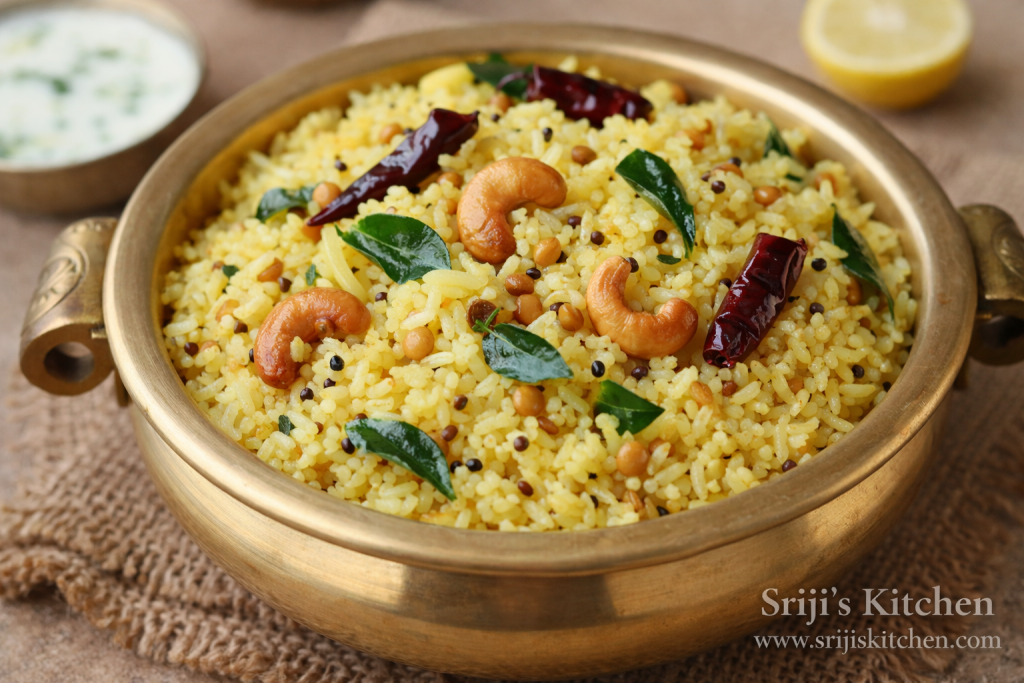
Sattvic Lemon Rice
(Temple-Style, No Onion, No Garlic)
A simple, fragrant rice dish prepared across many Vaiṣṇava homes, this sattvic lemon rice is light on the stomach, uplifting to the mind, and ideal for offering to Śrīman Nārāyaṇa. Though rooted in South Indian tradition, its clean flavours make it a comforting meal anywhere in the world.
Ingredients
Makes about 2–3 servings
-
Cooked rice (cooled and fluffy) – 1 cup
-
Fresh lemon juice – 1½ tbsp (adjust to taste)
-
Sesame oil or ghee – 1 tbsp
-
Mustard seeds – ½ tsp
-
Chana dal – 1 tsp
-
Urad dal – 1 tsp
-
Dried red chilies – 1–2 (optional)
-
Curry leaves – 8–10
-
Turmeric powder – ¼ tsp
-
Asafoetida (hing) – a pinch
-
Salt – to taste
-
Roasted peanuts or cashews – 1–2 tbsp (optional)
Method
-
Heat sesame oil or ghee in a pan on low flame.
-
Add cashews and fry until light golden; remove and keep aside.
-
In the same pan, add mustard seeds and allow them to splutter gently.
-
Add chana dal and urad dal; sauté until golden.
-
Add dried red chilies, curry leaves, and a pinch of hing.
-
Stir in turmeric powder and turn off the heat.
-
Add the cooked rice and mix gently, keeping the grains separate.
-
Add salt and fresh lemon juice; mix well.
-
Add the fried cashews and mix gently.
-
Allow the rice to rest for 5 minutes before offering or serving.
Naivedyam
This dish is prepared as an offering to Śrīman Nārāyaṇa and should be offered as naivedyam before it is partaken.
Notes, Tips & Variations
-
Short- or medium-grain rice such as sona masuri works best.
-
Cook rice with slightly less water so the grains stay firm.
-
Start with less lemon juice and adjust after mixing.
-
Lightly crushing curry leaves before tempering enhances aroma.
-
A few drops of raw sesame oil mixed at the end deepen traditional flavour.
- Traditionally, roasted peanuts are used in temple-style lemon rice; cashews are a gentle home-style variation.
Why this method works
-
Cooling the rice keeps the grains separate and light.
-
Tempering on low flame preserves aroma without bitterness.
-
Adding lemon juice after turning off the heat keeps the flavour fresh and balanced.
Common mistakes to avoid
-
Using hot or freshly cooked rice, which turns the dish mushy.
-
Adding lemon juice while the pan is still hot, dulling flavour.
-
Overheating the tempering, which overpowers the gentle sattvic aroma.
-
Using excess oil or ghee, making the dish heavy.
-
Tasting the dish before offering it as naivedyam.
Make-ahead / storage note
-
Lemon rice is best enjoyed fresh on the day it is prepared.
-
If needed, refrigerate and consume within 24 hours.
-
Reheat gently on low heat; avoid high-power microwaving.
Consistency cues (what to expect)
-
Rice grains should remain separate and fluffy, not clumped or sticky.
-
The rice should feel light and dry, with a gentle sheen from oil or ghee.
-
Lemon flavour should be fresh and bright, never cooked or bitter.
-
Tempering aroma should be gentle and balanced, not sharp or burnt.
-
The dish should feel uplifting and light, suitable for naivedyam and prasādam.
Cultural / prasādam context
Temple-style lemon rice is valued for its simplicity, purity, and balance. Free from onion and garlic, it is well-suited for daily offerings, festival naivedyam, and travel prasādam, remaining light yet satisfying.