Aloo Gobi with Ajwain and Shimla Mirch
(No Onion, No Garlic)
(A flavourful dry Aloo Gobi prepared with golden potatoes, cauliflower, colourful capsicum, cashews, and aromatic ajwain seeds.)
Aloo Gobi is one of the most loved potato and cauliflower dishes across India, with every household having its own variation. This version combines crispy fried potatoes, golden cauliflower florets, colourful capsicum, and roasted cashews with the distinctive aroma of ajwain to create a uniquely satisfying side dish.
The gentle sweetness and crunch of Shimla Mirch balance the richness of the fried vegetables, while tomatoes, ginger, curry leaves, and simple spices bring everything together. The result is a dry sabzi that is colourful, aromatic, and full of texture in every bite.
This Aloo Gobi with Ajwain and Shimla Mirch pairs beautifully with roti, chapati, puri, naan, or rice and is equally suitable for everyday meals, festive occasions, and naivedyam preparations.
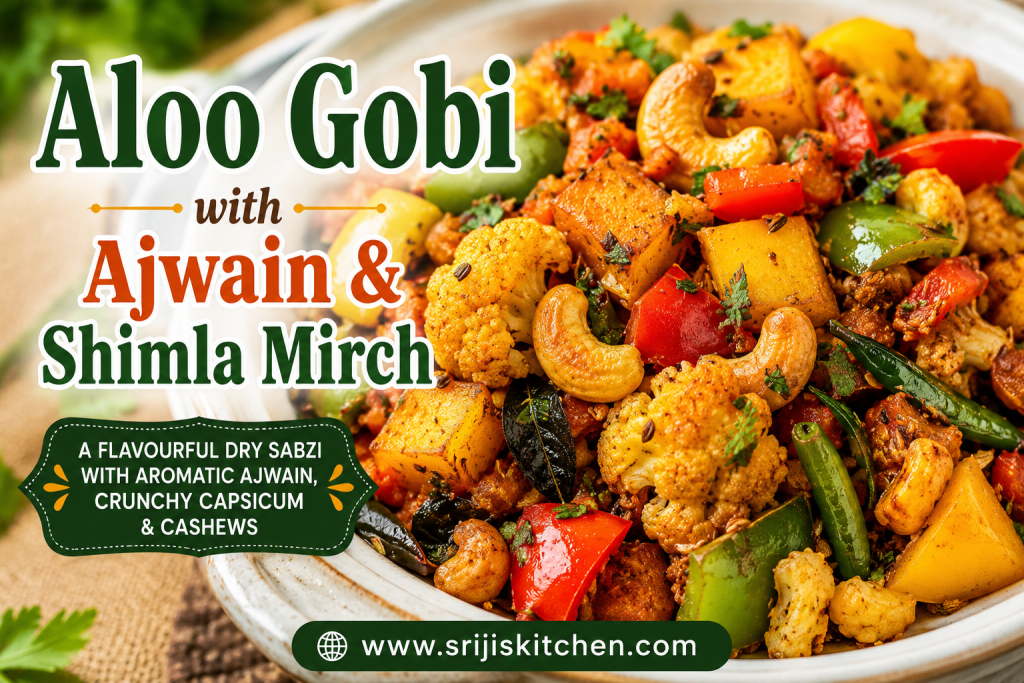
Golden potatoes, cauliflower, colourful capsicum, and cashews come together with aromatic ajwain to create a flavourful dry Aloo Gobi that pairs beautifully with roti, chapati, puri, or rice.
What is Aloo Gobi with Ajwain and Shimla Mirch?
Aloo Gobi with Ajwain and Shimla Mirch is a dry potato and cauliflower dish prepared with golden fried potatoes, cauliflower florets, colourful capsicum, cashews, tomatoes, and aromatic ajwain seeds. Unlike many traditional Aloo Gobi recipes, this variation combines the distinctive fragrance of ajwain with the freshness and crunch of Shimla Mirch, creating a unique balance of flavour and texture.
The fried potatoes and cauliflower provide a rich and satisfying base, while capsicum adds colour and a gentle sweetness. Finished with coriander, curry leaves, and simple spices, this no onion, no garlic recipe makes a delicious side dish for roti, chapati, puri, naan, or rice.
Ingredients
For frying
-
2 cups potato, diced
-
2 cups cauliflower florets
-
½ cup split cashews
-
Oil for frying
For the masala base
-
1 to 2 tablespoons oil
-
1 to 2 teaspoons ajwain seeds
-
1 tablespoon ginger, finely chopped
-
1 cup tomato, diced or sliced
-
Salt to taste
-
½ teaspoon turmeric powder
-
½ teaspoon red chilli powder
For finishing
-
2 to 4 green chillies
-
10 to 12 curry leaves
-
2 cups capsicum (mixed colours), diced
-
1 to 2 teaspoons coriander powder
-
1 to 2 tablespoons coriander leaves, chopped
Method
-
Heat oil to medium heat for deep frying.
-
Add the diced potatoes in batches as needed and deep fry until golden brown.
-
Transfer the fried potatoes to a bowl.
-
Increase the heat and deep fry the cauliflower florets in batches until golden brown.
-
Transfer the fried cauliflower to a bowl.
-
Reduce the heat to medium and deep fry the split cashews until golden brown.
-
Transfer the fried cashews to a bowl.
-
Heat a pan or wok and add 1 to 2 tablespoons oil.
-
Keep the heat at medium and add the ajwain seeds.
-
Add the chopped ginger and stir fry until the raw smell disappears.
-
Add the tomatoes and stir fry for about 1 minute.
-
Add salt, turmeric powder, and red chilli powder.
-
Stir and cook for another minute.
-
Cover and cook on medium heat, stirring occasionally, until the tomatoes become soft and mushy.
-
Add the fried potatoes, fried cauliflower, and fried cashews.
-
Mix gently without breaking the vegetables.
-
Add the green chillies, curry leaves, and capsicum.
-
Mix gently again so the potatoes and cauliflower remain intact.
-
Cover and cook on low heat for 3 to 4 minutes.
-
Add the coriander powder and chopped coriander leaves.
-
Mix gently once more.
-
Switch the heat off.
-
Cover and allow the dish to rest for about 10 minutes before serving.
-
Aloo Gobi with Ajwain and Shimla Mirch is ready to serve.
Naivedyam
Offer the freshly prepared Aloo Gobi with Ajwain and Shimla Mirch to ŚrīmanNārāyaṇa before serving. The combination of potatoes, cauliflower, capsicum, cashews, and aromatic ajwain creates a wholesome sattvic preparation suitable for both everyday meals and special naivedyam offerings.
After offering, serve as prasādam alongside roti, chapati, puri, naan, or a simple rice and dal meal.
Notes, Tips & Variations
- The potatoes and cauliflower can be fried in batches to ensure even cooking and good colour. Overcrowding the oil may result in uneven frying.
- Mixed coloured capsicum gives the dish a more vibrant appearance, but green capsicum alone also works well.
- Adjust the number of green chillies according to your preferred spice level.
- For a richer version, increase the quantity of cashews slightly.
- A small squeeze of lemon just before serving can add a fresh flavour variation.
- Fresh coriander leaves added at the end bring colour and freshness to the finished dish.
- If you enjoy a stronger ajwain flavour, increase the quantity slightly, but use it carefully as too much can overpower the vegetables.
Why this method works
Frying the potatoes and cauliflower separately helps them develop a rich flavour and pleasant texture while preventing them from becoming mushy during the final cooking stage.
Ajwain is added directly to the oil so its aroma infuses the entire dish from the beginning. The tomato base coats the vegetables gently, allowing the spices to spread evenly without creating a heavy gravy.
Capsicum is added toward the end of cooking so it retains some of its natural colour, freshness, and crunch. The final resting period allows the flavours of the ajwain, tomatoes, coriander, and vegetables to come together before serving.
Why Aloo Gobi with Ajwain and Shimla Mirch matters
Aloo Gobi is a classic combination found in countless home kitchens, yet a few carefully chosen ingredients can completely change its flavour and character. In this variation, aromatic ajwain and colourful Shimla Mirch bring a fresh dimension to the familiar pairing of potatoes and cauliflower.
Ajwain plays a key role in the dish, adding a warm, distinctive aroma that complements the richness of the potatoes and cauliflower beautifully. Shimla Mirch contributes freshness, colour, and a gentle crunch, creating a pleasing contrast to the fried vegetables and cashews.
Together, these ingredients transform a simple Aloo Gobi into a vibrant and satisfying dry sabzi that feels both comforting and special. The result is a memorable dish with layers of flavour, texture, and aroma while still retaining the familiar appeal that makes Aloo Gobi so widely loved.
How to serve Aloo Gobi with Ajwain and Shimla Mirch
Aloo Gobi with Ajwain and Shimla Mirch is traditionally served as a side dish alongside roti, chapati, puri, or naan. Its dry texture and aromatic flavour make it especially enjoyable with freshly made flatbreads.
It also pairs beautifully with steamed rice, jeera rice, or a simple dal and rice meal. The combination of potatoes, cauliflower, capsicum, and cashews adds enough texture and flavour to make it a satisfying accompaniment to both everyday and festive meals.
For a complete sattvic meal, serve it with dal, rice, chapati, and a cooling raita or buttermilk preparation. It can also be included as part of a larger prasādam spread alongside other vegetable dishes and traditional offerings.
Common mistakes to avoid
- Frying the potatoes or cauliflower at the wrong temperature can lead to uneven cooking. If the oil is too cool, the vegetables may absorb excess oil. If it is too hot, they may brown too quickly before cooking properly inside.
- Avoid overcrowding the oil while frying. Cooking in smaller batches helps the potatoes and cauliflower develop a better texture and colour.
- Do not stir the vegetables too aggressively after adding the fried potatoes and cauliflower. Gentle mixing helps them retain their shape and prevents them from breaking apart.
- Adding the capsicum too early can cause it to become soft and lose its natural crunch. It is best added toward the end of cooking.
- Using too much ajwain can overpower the dish. A moderate amount provides aroma and flavour without dominating the other ingredients.
- Skipping the resting time at the end may result in a less balanced flavour. Allowing the dish to rest for a few minutes helps the ajwain, spices, and vegetables come together more harmoniously.
Make-ahead / storage note
- Aloo Gobi with Ajwain and Shimla Mirch can be prepared a few hours in advance and kept covered until serving time. In fact, the flavours often become even better as the ajwain and spices have more time to settle into the vegetables.
- Leftovers can be stored in an airtight container in the refrigerator for up to 2 days. Reheat gently on low heat before serving. If needed, add a small splash of water while reheating to prevent the vegetables from drying out.
- For the best texture, avoid freezing, as the potatoes, cauliflower, and capsicum may become soft after thawing.
Consistency cues (what to expect)
The finished dish should be dry and lightly coated with the tomato and spice mixture rather than covered in a gravy.
The potatoes and cauliflower should be soft inside while retaining their shape. They should not be mushy or broken apart from excessive stirring.
The capsicum should remain slightly crisp and colourful, adding freshness and texture to the dish.
The aroma of ajwain should be noticeable but not overpowering. It should complement the vegetables rather than dominate them.
Each bite should offer a balance of soft potatoes, tender cauliflower, crunchy capsicum, and crisp cashews, creating a satisfying combination of flavours and textures.
Cultural / prasādam context
Aloo Gobi is a much-loved combination across India, appearing in countless regional and family variations. While the core ingredients of potato and cauliflower remain the same, each household often adds its own preferred spices, cooking methods, and finishing touches to create a unique version.
This variation highlights the distinctive aroma of ajwain, the freshness of colourful Shimla Mirch, and the richness of cashews, giving a familiar dish a special character while remaining simple and approachable.
Prepared without onion or garlic, Aloo Gobi with Ajwain and Shimla Mirch fits naturally into many sattvic kitchens and can be offered as naivedyam before being served as prasādam. Its combination of comforting flavours, vibrant colours, and wholesome ingredients makes it suitable for both everyday meals and special devotional occasions.
Final thought
Aloo Gobi with Ajwain and Shimla Mirch shows how a few thoughtfully chosen ingredients can give a familiar dish an entirely new personality. The warmth of ajwain, the freshness of capsicum, the richness of cashews, and the comforting combination of potatoes and cauliflower come together to create a dry sabzi that is both simple and memorable.
Whether served as part of an everyday meal or included in a special prasādam spread, this colourful variation proves that even the most familiar recipes can continue to delight with new flavours, textures, and aromas.