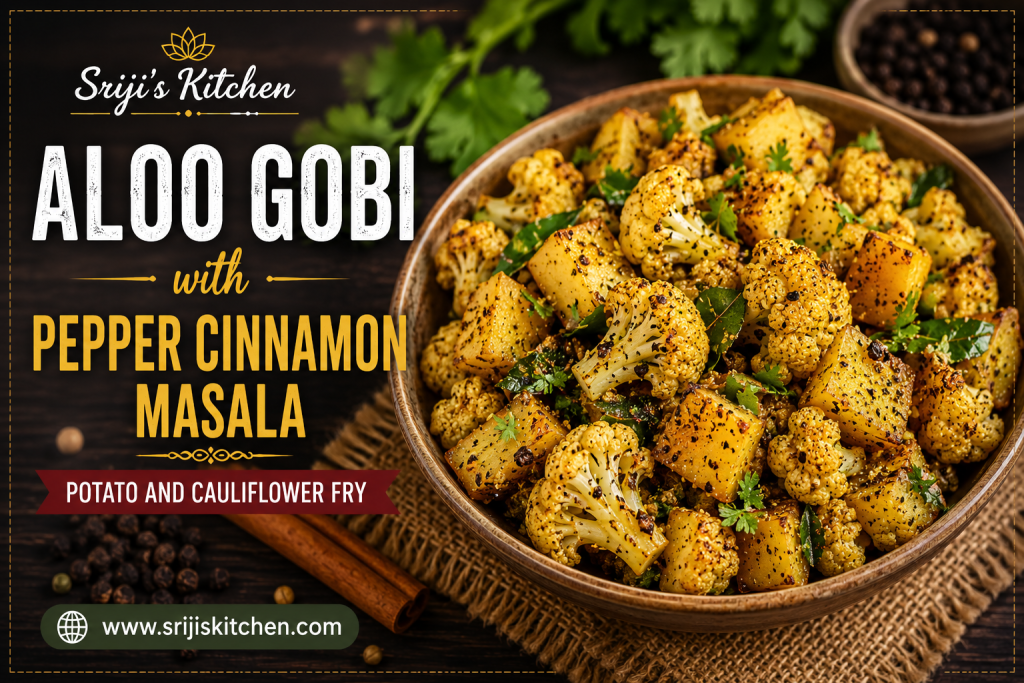
Aloo Gobi with Pepper Cinnamon Masala | Potato and Cauliflower Fry
(No Onion, No Garlic)
(A crisp and flavourful potato and cauliflower fry coated with homemade Pepper Cinnamon Masala and prepared without onion or garlic.)
Aloo Gobi is a popular potato and cauliflower dish enjoyed across many parts of India. Known as Aloo Gobi, Alu Phool Gobi, Batata Gobi, or Hukosu Palya in different regions, this simple combination of potatoes and cauliflower has long been a favourite accompaniment to everyday meals.
This recipe follows the dry style of Aloo Gobi, where golden fried potatoes and cauliflower are gently coated with a freshly prepared Pepper Cinnamon Masala instead of being cooked in a gravy. The combination of roasted spices, tomatoes, ginger, curry leaves, and green chillies creates a rich aroma and satisfying flavour while remaining completely free from onion and garlic.
The Pepper Cinnamon Masala used in this recipe is prepared from cinnamon, coriander seeds, fennel seeds, cumin seeds, and black peppercorns. Once added to the vegetables, it forms a fragrant coating that brings warmth, depth, and gentle spice to every bite.
Whether served alongside roti, chapati, puri, naan, or rice, this sattvic Potato and Cauliflower Fry makes a comforting addition to both everyday meals and special occasions.
What is Aloo Gobi with Pepper Cinnamon Masala | Potato and Cauliflower Fry?
Aloo Gobi with Pepper Cinnamon Masala is a dry potato and cauliflower fry prepared by coating golden fried potatoes and cauliflower florets with a freshly made Pepper Cinnamon Spice mix. The masala is prepared from roasted cinnamon, coriander seeds, fennel seeds, cumin seeds, and black peppercorns, giving the dish a distinctive aroma and warm, peppery flavour.
Known by names such as Aloo Gobi, Alu Phool Gobi, Batata Gobi, and Hukosu Palya, this dish combines two widely loved vegetables that are known by many regional names. Potato may be called Aloo, Alu, Batata, Aalugadde, Bangala Dumpa, Urlagadda, or Urulakizhangu, while cauliflower is often known as Gobi, Phool Gobi, Pookosu, Hukosu, Hookosu, Fulkopi, or Phulakobi.
Unlike gravy based versions of Aloo Gobi, this recipe follows the dry style, allowing the Pepper Cinnamon Masala to coat the vegetables evenly while preserving their texture. The result is a flavourful sattvic side dish that pairs beautifully with roti, chapati, puri, naan, or rice.
Ingredients
For frying
2 cups potato (aloo, alu, batata, aalugadde), diced
2 cups cauliflower florets (gobi, phool gobi, hukosu)
Oil, as needed for deep frying
For the masala base
1 to 2 tablespoons oil
1 tablespoon ginger, finely chopped
A pinch of hing (asafoetida)
1 tablespoon cabbage, finely shredded
½ teaspoon turmeric powder
Salt, to taste
1 cup tomato, finely chopped
For finishing
2 to 4 tablespoons Pepper Cinnamon Masala
3 to 5 green chillies
10 to 12 curry leaves
1 tablespoon coriander leaves, finely chopped
Pepper Cinnamon Masala (if preparing fresh)
2 inch cinnamon stick
4 tablespoons coriander seeds
1 tablespoon fennel seeds
1 tablespoon cumin seeds
1 tablespoon black peppercorns
Method
1. Heat oil in a deep frying pan over medium heat.
2. Once the oil is medium hot, add the diced potatoes.
3. Deep fry until the potatoes turn golden brown.
4. Transfer the fried potatoes to a bowl and set aside.
5. Increase the heat to high.
6. Once the oil is very hot, add the cauliflower florets.
7. Deep fry until the cauliflower turns golden brown.
8. Transfer the fried cauliflower to a bowl and set aside.
9. Heat 1 to 2 tablespoons oil in a pan or wok over medium heat.
10. Add the chopped ginger and a pinch of hing.
11. Stir and fry until the raw smell of the ginger disappears.
12. Add the shredded cabbage.
13. Stir and fry until the cabbage turns light brown.
14. Add the turmeric powder and salt.
15. Stir and fry for 1 minute.
16. Add the chopped tomatoes.
17. Stir and fry for 1 minute.
18. Cover and cook on medium heat, stirring occasionally, until the tomatoes become soft and mushy.
19. Add 2 to 4 tablespoons Pepper Cinnamon Masala according to taste.
20. Stir and fry for 1 minute.
21. Add the fried potatoes.
22. Add the fried cauliflower.
23. Mix gently so the vegetables are evenly coated with the masala without breaking them.
24. Add the green chillies and curry leaves.
25. Mix gently again.
26. Cover and cook for 3 to 4 minutes.
27. Turn off the heat.
28. Add the chopped coriander leaves.
29. Mix gently one final time.
30. Cover and allow the dish to rest for 10 minutes before serving.
31. Serve hot with roti, chapati, puri, naan, or rice.
Naivedyam
This Aloo Gobi with Pepper Cinnamon Masala can be offered as naivedyam when prepared according to your family or sampradāya traditions.
After cooking, transfer the dish to a clean serving bowl and allow it to cool slightly. Offer it with devotion before serving. The warm flavours of pepper, cinnamon, and freshly roasted spices make this potato and cauliflower fry a comforting addition to a traditional sattvic meal.
Once the naivedyam offering is complete, the dish may be served as prasādam alongside rice, chapati, roti, puri, or other accompanying preparations.
Notes, Tips & Variations
- For the best texture, fry the potatoes and cauliflower separately. Potatoes take longer to cook than cauliflower, and frying them individually helps both vegetables develop a golden exterior without becoming overcooked.
- The amount of Pepper Cinnamon Masala can be adjusted according to personal preference. Use 2 tablespoons for a milder flavour or up to 4 tablespoons for a richer and more aromatic finish.
- Avoid overcrowding the frying oil. Frying in smaller batches helps the vegetables brown evenly and prevents them from absorbing excess oil.
- The cabbage used in the masala base adds subtle sweetness and body to the dish. Although only a small amount is used, it contributes to the overall flavour and texture.
- For a spicier version, increase the number of green chillies. For a milder version, reduce them or leave them whole so they release less heat.
- The final 10 minute resting period is worth keeping. During this time, the Pepper Cinnamon Masala settles onto the vegetables and the flavours blend more evenly.
- A handful of roasted peanuts or roasted cashews can be added at the end for extra texture and richness.
- The same Pepper Cinnamon Masala works beautifully with other vegetables such as brinjal, baby potatoes, cabbage, ivy gourd, broad beans, or mixed vegetable stir fries.
Why this method works
This recipe works because each stage focuses on building flavour and preserving texture. Frying the potatoes and cauliflower separately allows both vegetables to develop a golden exterior while remaining soft inside. Since cauliflower cooks more quickly than potatoes, separate frying prevents one vegetable from becoming overcooked while the other remains undercooked.
The ginger, hing, cabbage, and tomato base creates a flavourful foundation for the dish. As the tomatoes cook down, they help the Pepper Cinnamon Masala coat the vegetables evenly rather than remaining dry or powdery.
The Pepper Cinnamon Masala itself brings together the warmth of cinnamon, the citrus notes of coriander seeds, the gentle sweetness of fennel, the earthiness of cumin, and the bold character of black pepper. Together, these spices create a balanced flavour profile that complements both potatoes and cauliflower.
The final resting period allows the vegetables to absorb the flavours of the masala more completely. As a result, the dish tastes more rounded and aromatic when served.
Why this recipe matters
Aloo Gobi is one of those timeless vegetable dishes that combines simple ingredients with satisfying flavour and texture. Potatoes and cauliflower are widely available, affordable, and familiar in many households, making this recipe easy to prepare throughout the year.
This version offers a different approach from many traditional Aloo Gobi recipes by using Pepper Cinnamon Masala as the primary seasoning. The result is a distinctive potato and cauliflower fry that remains simple while delivering a rich aroma and depth of flavour.
The recipe is also highly versatile. It can be served alongside rice, roti, chapati, puri, or naan, making it suitable for both everyday meals and special occasions. Because it is prepared without onion or garlic, it fits comfortably into many sattvic and prasādam meal traditions.
Perhaps most importantly, this recipe demonstrates how a few everyday vegetables and a small amount of freshly prepared masala can come together to create a comforting and memorable dish.
How to serve Aloo Gobi with Pepper Cinnamon Masala
- Aloo Gobi with Pepper Cinnamon Masala can be served hot as part of both everyday meals and special occasion menus. Its dry texture and rich flavour make it a versatile accompaniment to a wide variety of dishes.
- Serve it alongside roti, chapati, phulka, naan, or puri for a simple and satisfying meal. It also pairs beautifully with plain rice, jeera rice, lemon rice, curd rice, or other traditional rice preparations.
- For a more complete meal, combine it with dal, rasam, sambar, raita, or a simple yoghurt based side dish. The warm peppery notes of the masala complement cooling accompaniments particularly well.
- This potato and cauliflower fry also works well as part of a larger prasādam spread, where it can be served alongside rice, dal, vegetable preparations, and other sattvic dishes.
Common mistakes to avoid
- Avoid frying the potatoes and cauliflower together. Since they cook at different rates, one vegetable may become overcooked while the other remains undercooked.
- Do not add the cauliflower to oil that is not hot enough. Low oil temperature can cause the florets to absorb excess oil instead of developing a light golden exterior.
- Avoid overcooking the cauliflower. The florets should remain intact and hold their shape after frying and final cooking.
- Do not rush the tomato cooking stage. The tomatoes should become soft and mushy before the Pepper Cinnamon Masala is added so the masala coats the vegetables evenly.
- Avoid adding too much Pepper Cinnamon Masala at once. Start with a smaller amount and adjust according to taste, as the flavour becomes stronger as the dish rests.
- Mix the vegetables gently after adding the potatoes and cauliflower. Vigorous stirring can break the vegetables and turn the dish mushy.
- Do not skip the final resting period. Allowing the dish to rest for about 10 minutes helps the flavours settle and gives the masala time to coat the vegetables more evenly.
Make-ahead / storage note
- Aloo Gobi with Pepper Cinnamon Masala can be prepared a few hours in advance and kept covered at room temperature if it will be served the same day. In fact, the flavours often become more rounded as the Pepper Cinnamon Masala settles onto the vegetables.
- For longer storage, allow the dish to cool completely and transfer it to an airtight container. Store in the refrigerator for up to 2 days.
- When reheating, warm gently in a pan over low heat rather than stirring vigorously, as the potatoes and cauliflower may break apart if handled roughly. If needed, add a small sprinkle of Pepper Cinnamon Masala just before serving to refresh the aroma.
- This dish is best enjoyed fresh or within a day or two, when the vegetables still retain their texture and the masala remains vibrant.
Consistency cues (what to expect)
- A well prepared Aloo Gobi with Pepper Cinnamon Masala should be dry rather than saucy. The potatoes and cauliflower should be coated evenly with the masala while remaining separate and distinct.
- The potatoes should be soft inside with a lightly crisp exterior. The cauliflower should be tender yet still hold its shape without becoming mushy.
- The tomato base should blend into the masala rather than appear as a separate sauce. By the time the dish is finished, the tomatoes should have cooked down completely and helped the spices cling to the vegetables.
- The aroma should be warm and inviting, with noticeable notes of black pepper, cinnamon, coriander, cumin, and curry leaves.
- When served, each bite should offer a balance of potato, cauliflower, spice, and gentle heat without any single flavour overpowering the others.
Cultural / prasādam context
Potato and cauliflower preparations are enjoyed in many parts of India and appear in countless regional variations. Known as Aloo Gobi, Alu Phool Gobi, Batata Gobi, or Hukosu Palya, this humble combination of vegetables has earned a place in both everyday cooking and festive meal traditions.
This particular version follows a sattvic approach and is prepared without onion or garlic. The use of freshly roasted spices, ginger, curry leaves, and Pepper Cinnamon Masala creates a flavourful dish while keeping the ingredient list simple and familiar.
Because it is dry, easy to serve, and pairs well with a wide variety of accompaniments, Aloo Gobi with Pepper Cinnamon Masala fits naturally into traditional meal spreads and naivedyam preparations. It can be served alongside rice, chapati, puri, dal, and other vegetable dishes as part of a wholesome prasādam meal.
Like many traditional vegetable preparations, the beauty of this dish lies in transforming simple everyday ingredients into something satisfying, aromatic, and suitable for sharing with family, guests, and devotees.
Final thought
Aloo Gobi with Pepper Cinnamon Masala shows how a few everyday ingredients can come together to create a deeply satisfying dish. Golden potatoes, tender cauliflower, freshly roasted spices, and simple pantry staples combine to produce a vegetable fry that is both comforting and full of character.
Whether served with roti, chapati, puri, naan, or rice, this sattvic preparation offers a delicious way to enjoy two much loved vegetables in a flavourful new form. With its warm aroma, balanced spice, and versatile nature, it is a recipe that can be prepared and enjoyed throughout the year.