Cholai Raita | Amaranth Leaves Yogurt Relish | Totakura Perugu Pachadi
(No Onion, No Garlic)
A cooling sattvic yogurt based side dish made with fresh amaranth leaves, curd, ginger, and a mild traditional tempering.
Cholai Raita is a simple and comforting sattvic accompaniment prepared with fresh amaranth leaves, gently cooked with ginger and mixed into smooth fresh curd. The light tempering adds warmth and aroma while the yogurt keeps the dish cooling and refreshing.
Known across different regions as Cholai, Totakura, or Amaranth, this preparation is especially comforting during warmer months and pairs beautifully with simple everyday meals and comforting sattvic meals. The combination of soft cooked greens, fresh curd, ginger, green chilli, and curry leaves creates a balanced side dish that feels both light and satisfying.
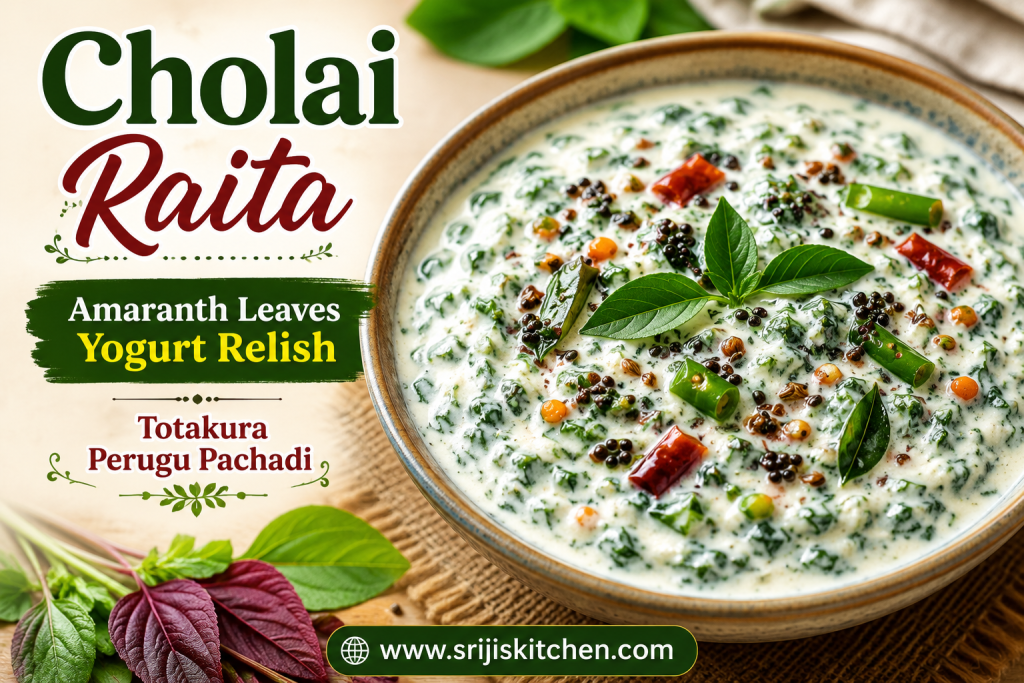
Cholai Raita served in a rustic bowl with fresh tempering and curry leaves
Ingredients
Leaves
200–250 gm fresh cholai / amaranth leaves
Cooking the leaves
2–3 tbsp oil
1 tbsp finely chopped ginger
½ tsp turmeric powder
Salt to taste
Tempering
2–3 tbsp oil
1 tsp mustard seeds
1 tsp urad dal
1 pinch hing
1 tsp cumin seeds
1–2 tsp chopped green chilli
10–12 curry leaves
1–2 tsp chopped dry red chilli
1 tsp ajwain seeds
Final mixing
3–4 tbsp fresh curd (whisked)
Method
Prepare the leaves
- Discard thick stems, flowers, and damaged leaves from the cholai.
- Pick the fresh tender leaves and place them in a wide bowl or container.
- Add plenty of water and wash the leaves thoroughly. Rinse well to remove any dirt.
- Transfer the cleaned leaves to a chopping board and chop them finely.
Cook the leaves
- Heat a pan or wok on medium heat.
- Add oil and allow it to heat gently.
- Add chopped ginger and stir fry on medium heat until the raw smell goes away.
- Add the chopped amaranth leaves and stir well.
- Cook on medium heat until the leaves become soft and fully cooked.
- Add turmeric powder and salt.
- Mix well and turn the heat off.
- Allow the cooked leaves to cool down completely.
Prepare the tempering
- Heat a small tadka pan on medium heat.
- Add oil and heat it well.
- Add mustard seeds and allow them to splutter.
- Add urad dal, hing, cumin seeds, chopped green chilli, and curry leaves.
- Stir briefly on low heat until aromatic.
- Turn the heat off.
- Add chopped dry red chilli and ajwain seeds.
- Allow the residual heat to gently fry the spices without burning them.
- Let the tempering cool down completely.
Final mixing
- Add fresh curd to a mixing bowl and whisk until smooth.
- Add 2 tbsp of the cooled cooked leaves and mix well.
- Add the cooled tempering and stir gently until evenly combined.
Cholai Raita is ready to serve.
Naivedyam
When preparing as naivedyam, use fresh homemade curd and mild spice levels for a softer sattvic flavour.
Notes, Tips & Variations
• Always cool both the cooked leaves and tempering fully before adding to curd.
• Fresh curd works better than sour curd for this recipe.
• You may adjust the quantity of green chilli according to preference.
• Finely chopped spinach or mixed greens can also be used in a similar way.
• For a slightly thinner consistency, whisk in 1–2 spoons of water or buttermilk.
Why this method works
Cooking the amaranth leaves separately helps remove excess moisture while keeping the greens soft and flavourful. Allowing both the leaves and tempering to cool completely before mixing prevents the curd from splitting and keeps the raita fresh, smooth, and cooling.
Common mistakes to avoid
• Mixing hot leaves or hot tempering directly into curd can make the yogurt split.
• Overcooking the tempering spices may create bitterness.
• Using very sour curd can overpower the gentle flavour of the greens.
• Adding too many leaves compared to curd may make the raita dry instead of creamy.
Make-ahead / storage note
The cooked leaves and tempering can be prepared a few hours in advance and stored separately. Mix with fresh curd shortly before serving for the best texture and flavour. Refrigerate leftovers and consume within one day.
Consistency cues (what to expect)
The finished Cholai Raita should feel soft, lightly creamy, and easy to spoon. The curd should coat the greens gently without becoming watery, while the tempering adds small bursts of texture and aroma throughout the dish.
Cultural / prasādam context
Simple yogurt based pachadis made with seasonal greens are common in many traditional South Indian home meals. Preparations like Totakura Perugu Pachadi are especially valued during warmer weather because they feel cooling, light, and comforting alongside rice based meals, traditional perugu pachadi recipes, and simple sattvic lunches.”