Javva Wheat Rava Upma
(No Onion, No Garlic)
(A soft and comforting South Indian style wheat rava upma prepared with vegetables, peanuts, cashews, ginger, and gentle spices.)
Javva Wheat Rava Upma is a warm and satisfying breakfast dish prepared with wheat rava, vegetables, ginger, curry leaves, peanuts, and cashews. The soft texture of the cooked rava combines beautifully with the gentle crunch of fried nuts and the freshness of coriander leaves, creating a balanced and comforting everyday meal.
This no onion no garlic version keeps the flavours simple, traditional, and sattvic while still feeling hearty and nourishing. Small amounts of carrot, cabbage, tomato, and green peas add colour, texture, and light sweetness without overpowering the gentle flavour of the wheat rava itself.
The tempering of mustard seeds, dals, cumin, curry leaves, hing, and green chillies gives the upma its classic South Indian aroma, while ginger adds warmth and depth. The final resting time allows the rava to absorb moisture fully, helping the upma become soft, fluffy, and evenly cooked.
Javva Wheat Rava Upma pairs beautifully with coconut chutney, pickle, curd, or a simple cup of hot filter coffee. It also works well as a light dinner or comforting evening tiffin when you want something filling yet easy to digest.
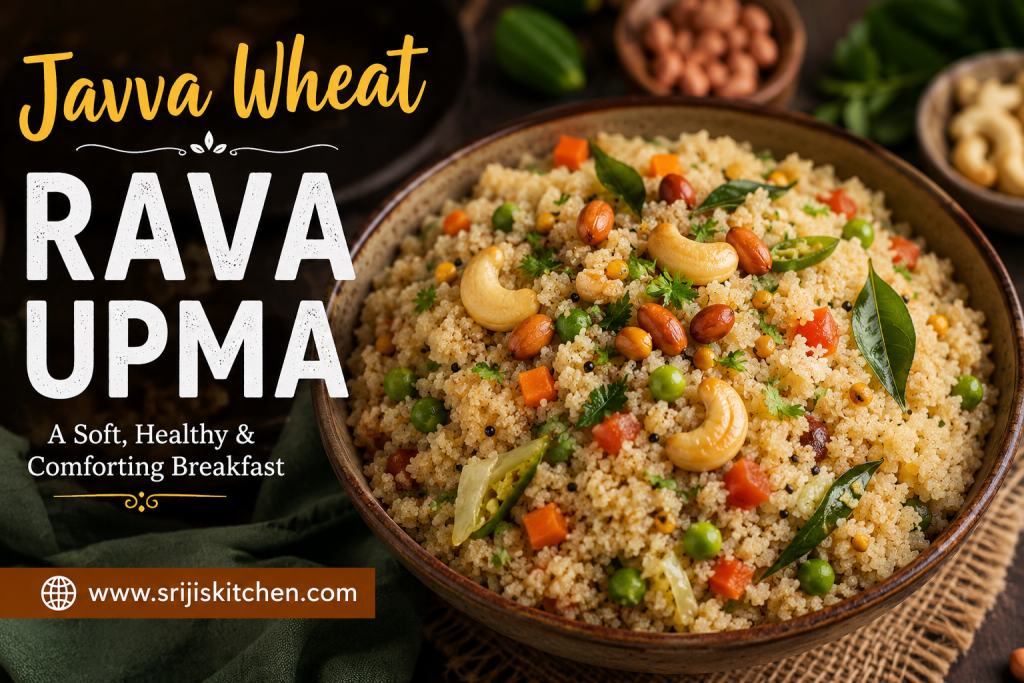
Soft and comforting Javva Wheat Rava Upma prepared with vegetables, peanuts, cashews, ginger, and traditional South Indian tempering.
What is Javva Wheat Rava Upma?
Javva Wheat Rava Upma is a soft and comforting South Indian breakfast dish prepared with wheat rava, vegetables, ginger, curry leaves, peanuts, cashews, and mild traditional tempering. The wheat rava is slowly cooked in hot water until soft and fluffy, creating a warm, satisfying meal that is both light and filling.
This no onion no garlic version keeps the flavours simple, balanced, and sattvic while still feeling rich in texture and aroma. The gentle crunch of fried peanuts and cashews pairs beautifully with the soft cooked rava and vegetables, while ginger, cumin, curry leaves, and hing give the dish its familiar home style South Indian flavour.
Javva Wheat Rava Upma is commonly enjoyed as a breakfast, evening tiffin, or light dinner and pairs well with coconut chutney, pickle, curd, or a simple cup of hot filter coffee.
Ingredients
For frying peanuts and cashews
2 spoons peanuts
2 spoons cashews
3 spoons oil
For the tempering
½ spoon mustard seeds
1 spoon chana dal
1 spoon urad dal
½ spoon cumin seeds
2 to 3 green chillies, slit
2 spoons curry leaves
A pinch of hing
For the vegetables
1 to 2 spoons shredded cabbage (optional)
2 spoons small diced carrot
1 to 2 spoons chopped tomato
1 spoon finely chopped ginger
1 to 2 spoons green peas
½ spoon ginger powder
1 spoon chopped coriander leaves
For the upma
1 cup javva wheat rava
3 cups hot water
Salt to taste
Method
- Heat a pan or wok on medium heat.
- Add the oil. Once warm, add the peanuts and fry on medium heat until they change colour and become aromatic. Remove and keep aside to cool.
- Add the cashews to the same oil and fry until lightly golden. Remove and keep aside to cool.
- Raise the heat slightly and add the mustard seeds. Allow them to crackle fully.
- Lower the heat to medium. Add the chana dal, urad dal, and cumin seeds. Fry until the chana dal turns light golden.
- Add the slit green chillies and curry leaves. Stir briefly until fragrant.
- Add the shredded cabbage, if using, and stir fry until slightly soft.
- Add the diced carrot and stir fry for 1 to 2 minutes.
- Add the chopped tomato and cook until soft and lightly pulpy.
- Add the chopped ginger and stir fry for 2 to 3 minutes so the raw aroma disappears.
- Add the hing and green peas. Stir fry for another 2 to 3 minutes.
- Add the ginger powder and mix well.
- Pour in the hot water and add salt to taste. Mix thoroughly.
- Cover and allow the water to come to a strong rolling boil.
- Lower the heat to medium. Slowly add the javva wheat rava while stirring continuously so that no lumps form.
- Mix thoroughly, cover, and cook on medium heat for about 10 to 15 minutes, stirring occasionally so the upma cooks evenly without sticking.
- Once the javva wheat rava becomes soft and fully cooked, add the chopped coriander leaves and mix gently.
- Turn off the heat, cover, and let the upma rest for 10 minutes. This helps the texture settle and become softer.
- Mix gently once again before serving.
- Garnish with the fried peanuts, fried cashews, and extra coriander leaves as desired.
Naivedyam
Before offering Javva Wheat Rava Upma as naivedyam, ensure that all ingredients used are suitable for your family or temple sampradāya. Prepare the dish calmly and cleanly, keeping the cooking space peaceful and sattvic throughout the process.
The gentle flavour, soft texture, ginger, curry leaves, peanuts, and cashews make this upma suitable as a simple home style offering, especially during breakfast, light tiffin, or everyday naivedyam preparation.
You may optionally garnish the naivedyam portion with a few extra fried cashews, peanuts, and fresh coriander leaves before offering. Serve warm after offering.
Notes, Tips & Variations
- You can adjust the water slightly depending on how soft or fluffy you prefer the upma. Slightly more water gives a softer texture.
- Roasting the javva wheat rava lightly before cooking can give a nuttier aroma and help keep the grains separate.
- The cabbage is optional but adds softness and gentle sweetness to the upma.
- You may add small amounts of beans, capsicum, or grated coconut for variation.
- For a milder version, reduce the green chillies slightly and increase the ginger for warmth without extra heat.
- If the upma becomes too thick while cooking, sprinkle a little extra hot water and mix gently.
- A spoon of fresh grated coconut mixed at the end gives a pleasant traditional flavour.
- The fried peanuts and cashews can be added directly into the upma or used only as garnish depending on your preferred texture.
- This upma pairs beautifully with coconut chutney, curd, pickle, or simple podi mixed with ghee.
Why this method works
Frying the peanuts and cashews separately helps them stay crunchy even after garnishing the upma.
Cooking the tempering ingredients slowly before adding the vegetables allows the oil to absorb the flavour of mustard seeds, dals, cumin, curry leaves, and ginger more deeply.
Adding the vegetables in stages helps each ingredient cook properly without becoming watery or overcooked.
Using hot water instead of cold water helps the javva wheat rava cook more evenly and smoothly.
Adding the javva wheat rava slowly while stirring continuously prevents lumps and gives the upma a soft, fluffy texture throughout.
The final resting time allows the wheat rava to absorb any remaining moisture gently, making the upma softer, lighter, and more balanced in texture.
Why this simple upma matters
Javva Wheat Rava Upma shows how a few simple pantry ingredients can become a deeply comforting and nourishing everyday meal when cooked with patience and balance.
Unlike heavier breakfast dishes, this upma feels light while still remaining filling and satisfying. The wheat rava provides warmth and texture, the vegetables add freshness and softness, and the tempering brings gentle aroma without overpowering the dish.
Because it is simple, adaptable, and easy to digest, it works beautifully for busy mornings, light dinners, recovery meals, or calm sattvic home cooking. Small details like frying the nuts separately, cooking the vegetables gradually, and allowing the final resting time help transform a basic upma into something softer, more flavourful, and more comforting.
It is also the kind of recipe that quietly fits into everyday life. The ingredients are simple, the cooking process is steady and practical, and the result feels warm, homely, and dependable without needing anything elaborate.
Serving suggestions
Javva Wheat Rava Upma is best served hot and fresh while still soft and fluffy. It works beautifully as a comforting breakfast, light dinner, or evening tiffin.
You can serve it on its own or pair it with:
Fresh coconut chutney
Curd or plain yogurt
Traditional podi with a little ghee
Mild pickle
Simple vegetable curry
Hot filter coffee or ginger tea
Because the texture is soft and balanced, it is also suitable as a gentle meal during colder weather, busy mornings, or days when you want something warm and easy to digest.
For a slightly richer version, drizzle a small spoon of ghee while serving. The fried peanuts and cashews added at the end give extra crunch and contrast to the soft upma texture.
Leftover upma can be lightly reheated with a sprinkle of hot water to soften it again before serving.
Common mistakes to avoid
- Do not add the javva wheat rava too quickly in one place, otherwise lumps may form before it mixes properly with the water.
- Do not cook on very high heat after adding the rava, as the bottom may stick while the inside remains undercooked.
- Avoid adding too much tomato or too many vegetables, otherwise the upma may become overly moist and heavy.
- Do not skip frying the peanuts and cashews separately if you want them to stay crunchy after garnishing.
- Avoid adding the coriander leaves too early during cooking, as their freshness and aroma reduce quickly with prolonged heat.
- Do not leave the upma uncovered immediately after cooking. The short resting time helps the javva wheat rava absorb moisture evenly and improves the final texture.
- If the water quantity is too low, the upma may become dry and grainy instead of soft and comforting.
Make-ahead / storage note
- Javva Wheat Rava Upma tastes best when served fresh and hot while the texture is still soft and fluffy.
- If needed, you can prepare the vegetable tempering in advance and refrigerate it for a few hours. When ready to cook, simply reheat the tempering, add hot water, and continue with the javva wheat rava.
- Leftover upma can be refrigerated for about 1 day in a covered container. While reheating, sprinkle a little hot water and mix gently to soften the texture again.
- As the upma rests, the wheat rava naturally absorbs more moisture and becomes slightly firmer. Reheating with a little water helps restore its softness and balance.
Consistency cues (what to expect)
- Well cooked Javva Wheat Rava Upma should look soft, fluffy, and lightly moist without excess water remaining in the pan.
- The wheat rava should feel fully cooked and expanded while still holding a gentle grainy texture rather than becoming pasty or mushy.
- The vegetables should remain soft but still visible throughout the upma, adding light colour and texture without overpowering the dish.
- The fried peanuts and cashews should provide a gentle crunch that contrasts with the soft texture of the upma.
- After resting, the upma should loosen slightly when mixed and hold together softly without feeling sticky, dry, or heavy.
Cultural / prasādam context
Simple upma varieties like Javva Wheat Rava Upma are commonly prepared in many South Indian homes as comforting everyday tiffin dishes because they are warm, filling, practical, and easy to prepare with basic pantry ingredients.
The gentle tempering of mustard seeds, curry leaves, dals, ginger, and hing reflects the familiar flavour foundation of many traditional South Indian sattvic breakfast preparations. The addition of peanuts and cashews gives the dish a slightly festive touch while still keeping it simple and homely.
Because the preparation is light, balanced, and free from onion and garlic, it is also suitable as a simple home style naivedyam or prasādam preparation in many households. The calm cooking process, soft texture, and warm aroma make it especially comforting during quieter mornings, light evening meals, or simple devotional home cooking.
Final thought
Javva Wheat Rava Upma reminds us that some of the most comforting meals do not come from complicated ingredients or elaborate preparation, but from simple cooking done patiently and thoughtfully. Soft wheat rava, gentle spices, fresh vegetables, and a calm tempering come together to create a warm everyday dish that feels both nourishing and deeply homely.