Sakkarai Pongal
(No Onion, No Garlic)
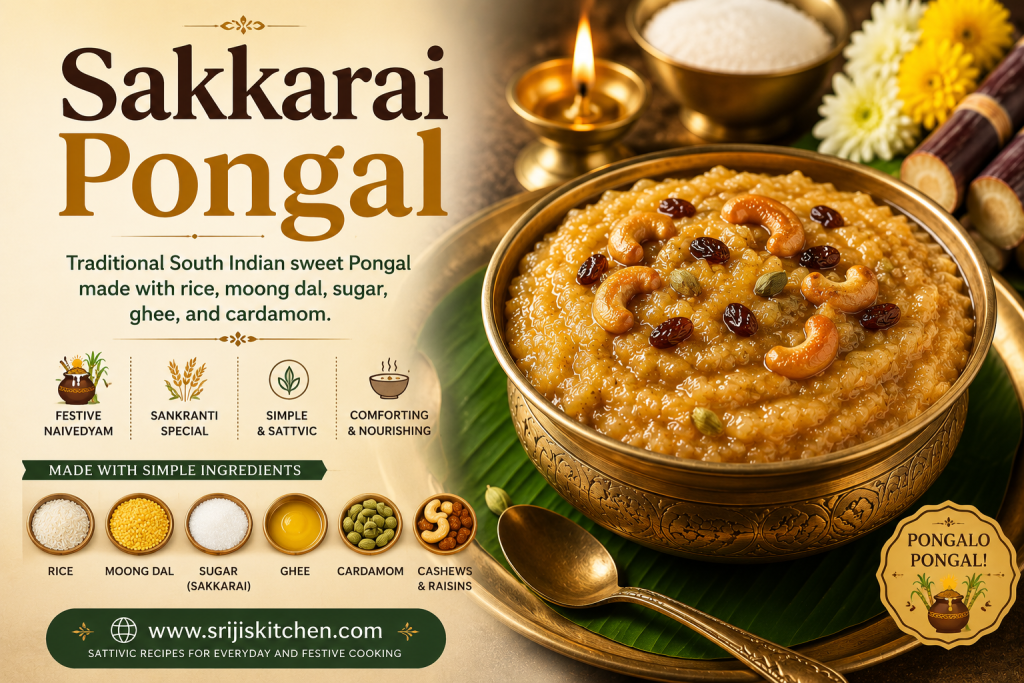
(Traditional South Indian sweet Pongal prepared with rice, moong dal, jaggery, and ghee for festive naivedyam and comforting sattvic meals.)
Sakkarai Pongal is a soft, comforting South Indian sweet traditionally prepared with rice, moong dal, jaggery, ghee, cardamom, and roasted cashews. Commonly prepared during harvest festivals such as Sankranti and Thai Pongal, this sweet dish is deeply associated with gratitude, abundance, and devotional cooking traditions across many homes and temples.
The word “Pongal” means “to overflow,” symbolising prosperity and fullness. Traditionally, the pot is allowed to boil over while families joyfully say “Pongalo Pongal!” as part of the festive celebration. Though often associated with Sankranti, Sakkarai Pongal is also prepared year round as naivedyam, temple prasadam, and a simple comforting sweet dish.
Traditional festive sweets such as Shira (Suji Halwa) and Navara Rice Jaggery Payasam similarly reflect the warmth, simplicity, and devotional spirit of sattvic home cooking.
Ingredients
Makes about 3–4 servings
Rice and dal
½ cup raw rice
¼ cup moong dal (split yellow dal)
3 to 3½ cups water
Jaggery mixture
¾ to 1 cup jaggery, crushed
A little water for melting jaggery
Tempering and finishing
2 tbsp ghee
A small handful of cashews
1 tbsp raisins
¼ tsp cardamom powder
A pinch of edible camphor (optional, only for festive naivedyam)
Method
1. Roast the moong dal
Place a pan on low heat and dry roast the moong dal gently until a mild aroma develops.
Do not brown the dal heavily. Light roasting helps develop flavour while keeping the final Pongal soft.
Switch off the heat once aromatic.
2. Cook the rice and dal
Wash the rice and roasted moong dal together thoroughly.
Add them to a pot or pressure cooker with water and cook on medium heat until both become very soft and slightly mushy.
Traditional Sakkarai Pongal should not remain grainy. The texture should look softer than the final serving consistency because the Pongal thickens naturally as it cools.
3. Prepare the jaggery syrup
Add crushed jaggery to a separate pan with a little water.
Heat gently on low flame until the jaggery melts completely.
Strain the liquid if needed to remove impurities.
Return the syrup to low heat and simmer briefly until slightly sticky. Do not overcook the syrup to a hard consistency.
Switch off the heat once ready.
4. Combine the Pongal
Add the cooked rice and dal mixture to the warm jaggery syrup.
Cook on low heat while mixing gently until everything combines smoothly.
Add cardamom powder and optional edible camphor.
Continue cooking on low heat for a few minutes until the Pongal becomes glossy and well blended.
Do not over reduce the mixture after adding jaggery, as the Pongal thickens significantly while resting.
5. Prepare the tempering
Heat ghee in a small pan on low to medium heat.
Fry the cashews until lightly golden.
Add raisins and cook briefly until they puff.
Switch off the heat and pour the tempering over the Pongal.
Mix gently before serving.
Naivedyam
For naivedyam preparation, many families traditionally prepare Sakkarai Pongal fresh and offer it warm before serving.
A very small pinch of edible camphor may optionally be used for festive offerings, but it should be used sparingly and only if food grade edible camphor is available.
Notes, Tips & Variations
- Adjust the jaggery to taste
Use less jaggery for a lighter sweetness or slightly more for a richer festive style Pongal. - Keep the Pongal slightly loose while cooking
Sakkarai Pongal thickens naturally as it cools, so avoid cooking it until dry. - Use freshly crushed cardamom when possible
Freshly powdered cardamom gives a warmer and more traditional aroma than packaged powder. - Edible camphor should be used very sparingly
Only a tiny pinch is needed for festive naivedyam. Too much can overpower the dish. - Roasting the moong dal improves flavour
Light roasting adds a gentle nutty aroma and deeper traditional flavour. - For a richer temple style variation
Add a little extra ghee during the final mixing stage for a softer and more luxurious texture. - Cashews and raisins can be adjusted
Some families prefer more cashews, while others keep the garnish minimal and simple. - A little milk can be added while reheating
If the Pongal becomes too thick after refrigeration, gently loosen it with warm milk or hot water while reheating. - Traditionally served warm
Sakkarai Pongal is usually enjoyed warm soon after preparation, especially during festive offerings and family meals. - Pairs beautifully with festive meals
Traditional South Indian festive meals may also include dishes such as ŚrīRāmanavami Neer Mor, Shira (Suji Halwa), and Navara Rice Jaggery Payasam.
Why this method works
This traditional method allows the rice and moong dal to cook until soft and creamy, giving Sakkarai Pongal its characteristic comforting texture.
Lightly roasting the moong dal before cooking develops a deeper aroma without making the dish heavy. Preparing the jaggery syrup separately helps remove impurities and prevents the milk solids and jaggery from affecting the texture of the cooked rice.
Cooking the Pongal gently on low heat after combining everything allows the jaggery, ghee, and cardamom to blend smoothly into the rice and dal mixture. The final tempering of ghee, cashews, and raisins adds richness, aroma, and traditional festive flavour.
Keeping the Pongal slightly loose while cooking is especially important because it thickens naturally as it rests, helping maintain the soft texture traditionally associated with temple style and home style Sakkarai Pongal.
Common mistakes to avoid
- Cooking the rice and dal until only partially soft
Traditional Sakkarai Pongal should have a soft, comforting texture. Slightly undercooked rice can make the Pongal feel dry and grainy instead of smooth and rich. - Making the jaggery syrup too thick
Overcooking the jaggery syrup can harden the final Pongal and affect its soft texture. The syrup only needs to become lightly sticky. - Adding jaggery before the rice and dal are fully cooked
Jaggery can slow further softening of the rice and dal, so both should be fully cooked before combining. - Reducing the Pongal too much after mixing
Sakkarai Pongal thickens naturally while resting. Keeping it slightly loose during cooking helps maintain the traditional soft consistency. - Using high heat after adding jaggery
Cooking on high heat after combining the jaggery can affect texture and may cause sticking at the bottom of the pan. Low heat gives smoother results. - Using too much edible camphor
Edible camphor is optional and should be used only in a very tiny quantity. Excess can overpower the flavour completely. - Skipping the ghee tempering
The final ghee tempering adds aroma, richness, and the characteristic festive flavour associated with traditional Sakkarai Pongal. - Overcrowding the garnish in hot ghee
Adding too many cashews and raisins at once may cook them unevenly. Fry them gently in small quantities for better colour and flavour.
Make-ahead / storage note
- Sakkarai Pongal can be prepared slightly ahead and gently reheated before serving.
- As the Pongal cools, it naturally thickens because the rice, dal, and jaggery continue absorbing moisture. For the best texture, keep the Pongal slightly softer than the final serving consistency while cooking.
- When reheating, add a small splash of hot water or warm milk and warm gently on low heat while stirring occasionally. Avoid reheating on high heat, as this may cause sticking or uneven thickening.
- Store refrigerated in a covered container for up to 2 days.
- Freshly prepared Sakkarai Pongal usually has the softest texture and richest aroma, especially when served warm for naivedyam or festive meals.
Consistency cues (what to expect)
- Sakkarai Pongal should feel soft, rich, and slightly flowing when hot, not dry or firmly set.
- While cooking, the mixture may appear slightly looser than the final serving consistency. This is expected because the rice, moong dal, and jaggery continue absorbing moisture as the Pongal rests.
- The cooked rice and dal should blend together smoothly rather than remaining separate or grainy. The final texture should feel creamy and comforting with a gentle glossy finish from the ghee and jaggery.
- After adding the jaggery syrup, the Pongal should thicken gradually on low heat without becoming stiff. Once the ghee tempering is added, the aroma becomes richer and the surface develops a soft sheen.
- Cashews should remain lightly crisp, while raisins should become soft and slightly puffed.
- If the Pongal becomes too thick after cooling, gently loosening it with a little warm milk or hot water during reheating is completely normal and traditionally done in many homes.
Cultural / prasādam context
Sakkarai Pongal holds a special place in many South Indian homes and temples as a dish closely associated with gratitude, abundance, and devotional offering traditions.
The word “Pongal” itself means “to overflow,” symbolising prosperity, fullness, and the hope for a blessed year ahead. During harvest celebrations such as Sankranti and Thai Pongal, the dish is traditionally prepared using newly harvested rice and allowed to boil over intentionally while families joyfully say “Pongalo Pongal!” as a sign of auspicious abundance.
In many homes, Sakkarai Pongal is first offered as naivedyam before being shared with family, guests, neighbours, and community members. The preparation is often associated with simplicity, warmth, and the idea that even humble ingredients such as rice, dal, jaggery, and ghee can become deeply meaningful when prepared with care and gratitude.
Temple style Sakkarai Pongal is especially known for its soft texture, generous use of ghee, gentle cardamom aroma, and comforting richness. Variations exist across regions and traditions, but the spirit of offering, sharing, and gratitude remains central throughout.
Festive meals that include Sakkarai Pongal are often accompanied by dishes and drinks such as ŚrīRāmanavami Neer Mor, fruits, sugarcane, coconut, and other traditional sattvic preparations served during auspicious occasions.