Sattvic Vegetable Biryani
(No Onion, No Garlic)
(A fragrant one-pot rice dish prepared with basmati rice, vegetables, whole spices, fresh herbs, and ghee.)
Sattvic Vegetable Biryani brings together fragrant basmati rice, colourful vegetables, warming whole spices, fresh herbs, and ghee in a preparation that feels festive yet remains simple enough for everyday cooking. It is a wonderful addition to a collection of Rice Recipes, Vegetable Recipes, and Sattvic Recipes.
Unlike many restaurant-style biryanis that rely heavily on onion, garlic, and rich gravies, this version develops its flavour through carefully selected spices, ginger, mint, coriander, and slow cooking. The result is aromatic, satisfying, and balanced, allowing the natural flavours of the rice and vegetables to shine. If you enjoy Basmati Rice Recipes and wholesome No Onion No Garlic Recipes, this preparation is an excellent choice.
Whether prepared for a family meal, a special occasion, or as a Naivedyam Recipe, this biryani demonstrates how traditional sattvic cooking can create depth and complexity while remaining gentle, wholesome, and nourishing. It is equally at home among festive Prasādam Recipes and everyday meals shared with family and friends.
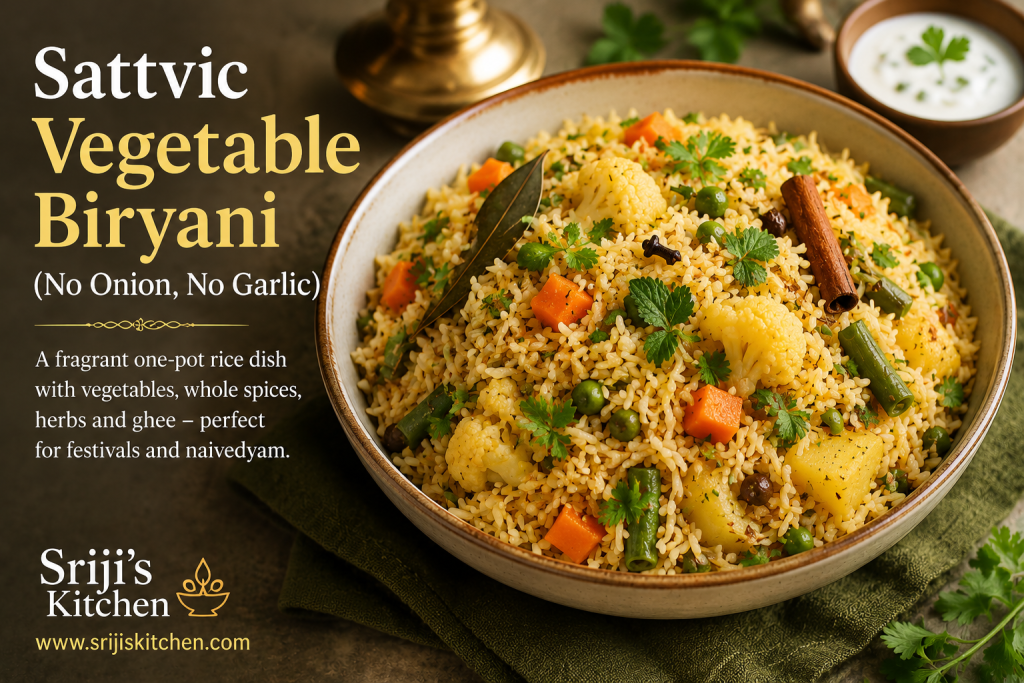
A fragrant Sattvic Vegetable Biryani made with basmati rice, mixed vegetables, whole spices, fresh herbs, and ghee for a wholesome festival meal.
What is Sattvic Vegetable Biryani?
Sattvic Vegetable Biryani is a fragrant rice dish prepared with basmati rice, mixed vegetables, whole spices, fresh herbs, and ghee, without the use of onion or garlic. It combines the aroma and richness associated with traditional biryani while remaining aligned with the principles of sattvic cooking.
Unlike many restaurant-style biryanis that depend on heavy gravies and strong aromatics, this preparation develops flavour through carefully balanced spices, ginger, mint, coriander, and slow cooking. The result is a biryani that feels light, wholesome, and satisfying while still delivering the characteristic fragrance and texture that make biryani so popular.
This preparation is especially suitable for those seeking Sattvic Recipes, Rice Recipes, and Prasādam Recipes that can be enjoyed both as everyday meals and on special occasions. Whether served during family gatherings, festival celebrations, or as a Naivedyam Recipe, Sattvic Vegetable Biryani offers a comforting and nourishing meal that showcases the beauty of simple ingredients prepared with care.
Sattvic Vegetable Biryani is also a wonderful addition to a collection of Vegetable Recipes, Festival Recipes, and Basmati Rice Recipes, demonstrating how simple ingredients can be transformed into a memorable and nourishing meal.
Ingredients
For the Rice
- 1½ cups basmati rice
- Water for soaking and cooking
Vegetables
- 1 cup mixed vegetables (carrot, beans, peas, cauliflower)
- ½ cup potato, diced
Whole Spices
- 2 bay leaves
- 4 green cardamom pods
- 1 small cinnamon stick
- 4 to 5 cloves
- 1 teaspoon cumin seeds
Aromatics and Seasonings
- 2 tablespoons ghee
- 1 teaspoon ginger paste
- 2 green chillies, slit
- ¼ teaspoon turmeric powder
- 1½ teaspoons biryani masala (no onion, no garlic)
- Salt to taste
Herbs and Enrichment
- ¼ cup thick fresh curd, at room temperature
- 2 tablespoons fresh coriander leaves, chopped
- 1 tablespoon fresh mint leaves, chopped
For Finishing
- A pinch of saffron soaked in 2 tablespoons warm milk
or
- 1 teaspoon rose water (optional)
Method
- Wash the basmati rice thoroughly and soak it in water for 20 to 30 minutes. Drain and set aside.
- Heat ghee in a heavy-bottomed pan, pot, or pressure cooker over medium heat.
- Add the bay leaves, cardamom, cinnamon, cloves, and cumin seeds. Stir gently for 30 to 40 seconds until the spices become fragrant.
- Add the ginger paste and slit green chillies. Stir and cook for about 1 minute until the raw aroma of the ginger disappears.
- Add the diced potato and mixed vegetables. Mix well and cook for 3 to 4 minutes, allowing the vegetables to absorb the flavours of the spices and ghee.
- Add the turmeric powder, biryani masala, and salt. Stir gently so the vegetables are evenly coated.
- Add the curd and mix well until combined with the vegetables and spices.
- Add the drained basmati rice and gently mix once or twice, taking care not to break the grains.
- Pour in 2½ to 2¾ cups of water and bring the mixture to a gentle boil.
- Reduce the heat to low, cover, and cook until the rice is tender and all the water has been absorbed. If using a pressure cooker, cook for 1 whistle and allow the pressure to release naturally.
- Switch off the heat and sprinkle the saffron milk over the rice. Add the chopped coriander and mint leaves.
- Cover and allow the biryani to rest for 10 minutes before gently fluffing the rice with a fork or spoon.
- Serve hot as part of a wholesome meal or prepare it as a Naivedyam Recipe before serving as prasādam.
Naivedyam
This Sattvic Vegetable Biryani can be prepared as a special Naivedyam Recipe for Śrīman Nārāyaṇa on festival days, family celebrations, and other auspicious occasions. The combination of fragrant rice, vegetables, ghee, herbs, and spices creates a wholesome offering that is both satisfying and nourishing.
Prepare the biryani with a peaceful and devotional mindset, using clean ingredients and utensils reserved for cooking. Once prepared, transfer it to a suitable offering vessel and offer it warm before tasting or serving.
After offering, the biryani becomes prasādam and may be served alongside curd, pachadi, kootu, or other complementary dishes as part of a complete meal.
Notes, Tips & Variations
- Use good-quality basmati rice with long, intact grains for the best texture and aroma.
- Soaking the rice before cooking helps the grains cook evenly and remain separate after cooking.
- The choice of vegetables can be adjusted according to availability. Carrot, beans, peas, cauliflower, and potato work particularly well in this recipe.
- Fresh mint and coriander contribute significantly to the final flavour, so avoid omitting them if possible.
- For special occasions, add a pinch of saffron soaked in warm milk before resting the biryani. This adds both colour and fragrance.
- Cashews fried in a little ghee can be sprinkled over the biryani before serving for additional texture and richness.
- For a milder version, reduce the number of green chillies and allow the whole spices to provide most of the flavour.
- If preparing the biryani for guests, allow it to rest for 10 minutes after cooking. Resting helps the flavours settle and improves the texture of the rice.
- This recipe pairs beautifully with Pachadi Recipes, Kootu Recipes, plain curd, or other light accompaniments that complement the fragrant rice without overpowering it.
- Leftover biryani can be repurposed into a quick lunch by serving it with curd and a simple vegetable side dish.
Why this method works
This method allows each ingredient to contribute its own flavour while maintaining the light and balanced character that makes a good Sattvic Vegetable Biryani. Whole spices are first cooked in ghee, releasing their natural aromas and creating a fragrant foundation for the dish.
The vegetables are briefly sautéed before the rice is added, allowing them to absorb the flavours of the spices without becoming overcooked. The curd adds gentle richness and helps bind the flavours together, while the basmati rice absorbs the seasoned cooking liquid as it cooks.
Cooking the biryani on low heat ensures that the rice grains remain long and separate while allowing the spices, herbs, and vegetables to blend harmoniously. A short resting period after cooking further improves the texture and allows the aromas to settle throughout the dish.
The result is a wholesome Rice Recipe that is fragrant, satisfying, and suitable for both everyday meals and special Prasādam Recipes, demonstrating how simple ingredients can create remarkable flavour when prepared with care.
Why Sattvic Vegetable Biryani Matters
Sattvic Vegetable Biryani demonstrates that a fragrant, satisfying biryani does not depend on onion, garlic, or heavy ingredients. By combining basmati rice, vegetables, whole spices, fresh herbs, and ghee, it creates a meal that is both nourishing and full of flavour while remaining true to the principles of sattvic cooking.
The recipe also highlights the versatility of rice as a foundation for complete meals. A single pot can bring together grains, vegetables, herbs, and spices in a balanced preparation that is suitable for everyday cooking as well as special occasions.
For many families, biryani is associated with celebrations and gatherings. This version offers a way to enjoy those same festive flavours within the framework of Sattvic Recipes and Prasādam Recipes, making it suitable for naivedyam offerings, festival meals, and family feasts.
Above all, Sattvic Vegetable Biryani shows how simple ingredients, prepared with care and devotion, can be transformed into a memorable meal that brings together nourishment, fragrance, tradition, and joy.
How to Serve Sattvic Vegetable Biryani
Sattvic Vegetable Biryani is satisfying enough to be served as a complete meal on its own, yet it also pairs beautifully with a variety of traditional accompaniments. Serve it hot with plain curd, a cooling Pachadi Recipe, or a simple vegetable Kootu Recipe to create a balanced meal.
For festive occasions, the biryani can be included as part of a larger spread alongside Prasādam Recipes such as vegetable curries, fried appetisers, sweet dishes, and traditional rice preparations. Its fragrant aroma and colourful appearance make it a natural centrepiece for celebration meals.
A small bowl of fresh curd helps balance the warmth of the spices, while roasted papad or a simple salad can add contrast in texture. For special gatherings, a garnish of fried cashews and fresh coriander just before serving adds an attractive finishing touch.
Whether served for a family lunch, festival feast, or as a Naivedyam Recipe offered to Śrīman Nārāyaṇa, this biryani is best enjoyed warm, allowing the fragrance of the rice, herbs, and spices to be fully appreciated.
Common mistakes to avoid
- Skipping the rice soaking step. Soaking helps the basmati rice cook evenly and produce the long, separate grains that are characteristic of a good Sattvic Vegetable Biryani.
- Using too much water. Excess water can make the rice soft and sticky rather than light and fluffy.
- Overcooking the vegetables before adding the rice. The vegetables should remain tender while still holding their shape after the biryani has finished cooking.
- Stirring the rice too frequently. Excessive mixing can break the grains and affect the final texture of the dish.
- Using too much biryani masala. A heavy hand with spices can overwhelm the delicate flavours of the rice, vegetables, and fresh herbs.
- Cooking on high heat during the final stage. Gentle cooking allows the rice to absorb flavour evenly without sticking to the bottom of the pot.
- Omitting fresh mint or coriander. These herbs contribute significantly to the aroma and freshness that distinguish a good Vegetable Biryani Recipe.
- Opening the lid immediately after cooking. Allowing the biryani to rest for a few minutes helps the grains firm up and allows the flavours to settle throughout the dish.
- Using poor-quality or broken rice. Good-quality basmati rice makes a noticeable difference to both texture and presentation.
- Adding too many vegetables. While vegetables are important, the rice should remain the star of the dish, with the vegetables complementing rather than dominating the preparation.
Make-ahead / storage note
- Sattvic Vegetable Biryani can be prepared a few hours in advance, making it a convenient option for family gatherings, festival meals, and special occasions. Once cooked, keep it covered and allow it to rest until ready to serve.
- Any leftovers should be cooled completely before being transferred to an airtight container and refrigerated. The biryani will keep well for up to 2 days.
- To reheat, sprinkle a little water over the rice, cover, and warm gently on the stovetop or in a microwave. This helps restore moisture and prevents the rice from becoming dry.
- For the best flavour and texture, avoid repeated reheating. Like many Rice Recipes, Sattvic Vegetable Biryani is most enjoyable when freshly prepared or reheated only once.
Consistency cues (what to expect)
A well-prepared Sattvic Vegetable Biryani should have long, separate grains of rice that remain light and fluffy rather than sticky or clumped together. Each grain should be coated with the flavours of the spices while still retaining its individual texture.
The vegetables should be fully cooked yet still hold their shape, providing colour, texture, and contrast throughout the dish. The potato should be tender, while the other vegetables should remain pleasantly firm without becoming mushy.
The aroma should be warm, fragrant, and inviting, with notes of cinnamon, cardamom, cloves, mint, and coriander. No single spice should dominate; instead, the flavours should blend harmoniously.
The finished biryani should feel rich and satisfying while remaining balanced and relatively light, reflecting the principles of traditional Sattvic Recipes. Each spoonful should contain a combination of fluffy rice, vegetables, herbs, and gentle spice, creating a meal that is both comforting and celebratory.
Cultural / prasādam context
Rice has always occupied a special place in traditional cooking, serving as the foundation for countless meals prepared for both everyday nourishment and festive occasions. Dishes that combine rice, vegetables, spices, and ghee are especially valued because they transform simple ingredients into a complete and satisfying meal.
While Sattvic Vegetable Biryani is not a traditional temple preparation, it fits naturally within a home-prasādam setting where wholesome ingredients are prepared with devotion and first offered to Śrīman Nārāyaṇa. Its fragrant aroma, colourful appearance, and balanced flavours make it particularly suitable for family celebrations, festival meals, and special gatherings.
The recipe also reflects the beauty of Sattvic Recipes, where flavour is developed through grains, vegetables, herbs, spices, and careful cooking rather than onion or garlic. This approach allows the natural qualities of the ingredients to shine while maintaining a sense of simplicity and purity.
When prepared as a Naivedyam Recipe and offered with devotion, Sattvic Vegetable Biryani becomes more than a rice dish. It becomes an expression of gratitude, hospitality, and service, bringing family and devotees together to share prasādam in a spirit of joy and remembrance of the Lord.
Final thought
Sattvic Vegetable Biryani demonstrates how a handful of everyday ingredients can be transformed into a meal that feels both comforting and festive. Fragrant basmati rice, colourful vegetables, fresh herbs, whole spices, and ghee come together to create a preparation that is simple enough for regular cooking yet special enough for celebrations.
The recipe highlights the versatility of Rice Recipes and the depth of flavour that can be achieved through traditional Sattvic Recipes without relying on onion or garlic. Every ingredient contributes to a balanced combination of aroma, texture, and nourishment.
Whether prepared for a family gathering, a festival meal, or as one of your cherished Prasādam Recipes, this biryani offers a beautiful reminder that wholesome ingredients, thoughtful preparation, and devotion can transform an ordinary meal into something truly memorable.