Delhi Sattvic Thalis
(No Onion, No Garlic)
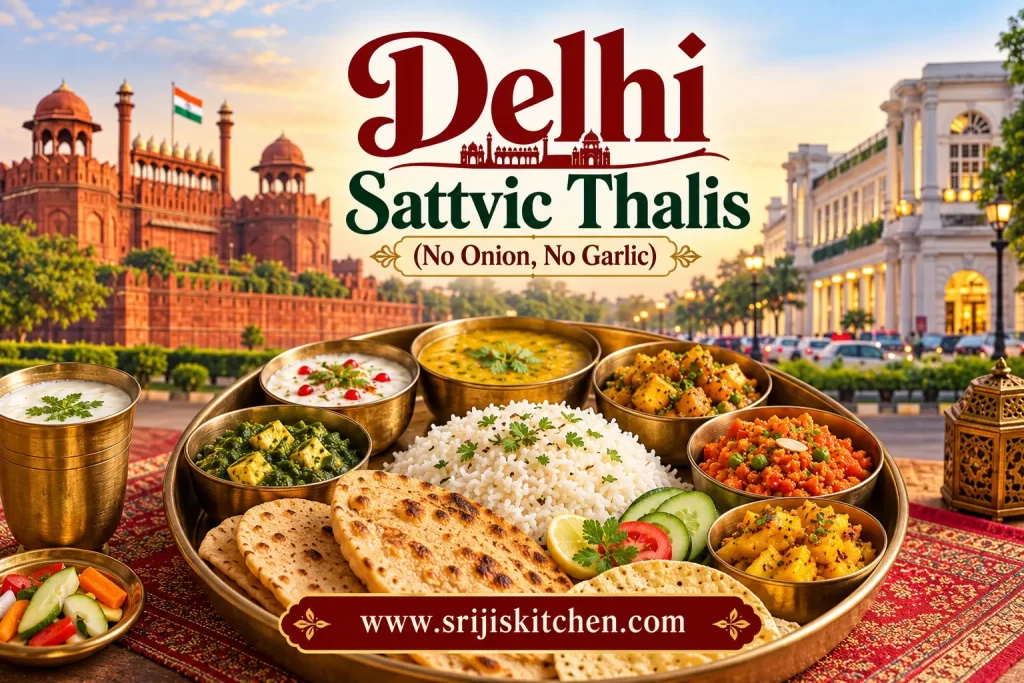
(Explore traditional Delhi sattvic thalis featuring distinctive traditional meal combinations, prepared without onion or garlic and suitable for offering as naivedyam.)
Delhi has a remarkably diverse culinary heritage, shaped by the historic food culture of Shahjahanabad, generations of migration, wider North Indian traditions and the city’s distinctive home-cooking and street-food heritage. Delhi meals draw on preparations such as roti, paratha, puri, dal, chole, rajma, seasonal sabzi, rice, dahi, raita, chutneys, achar and a wide variety of traditional sweets and accompaniments.
The Delhi sattvic thalis in this collection explore these varied meal combinations while following sattvic cooking principles. Every thali is prepared without onion or garlic and is designed to be suitable for offering as naivedyam before being served as prasādam.
Delhi cuisine cannot be represented by a single thali. The historic food traditions of Shahjahanabad and present-day Purani Dilli, Punjabi influences, everyday home cooking, Delhi’s celebrated chaat and street-food culture, and festive and seasonal meals all contribute distinctive dishes and combinations. This collection will therefore feature multiple Delhi thalis, each highlighting a different aspect of the city’s culinary heritage.
Indian Sattvic Thalis · Delhi Recipes · No Onion No Garlic Recipes · Naivedyam
The traditional Delhi meal
A traditional Delhi meal reflects the city’s position at the meeting point of several North Indian culinary traditions. Wheat-based breads such as roti, phulka and paratha are widely eaten alongside dal, seasonal sabzi, chole, rajma, paneer preparations, dahi, raita, achar and chutneys. Rice also forms part of many meals, while puri, stuffed parathas and other breads may feature according to the household, season and occasion.
Dal and pulse-based dishes provide substantial accompaniments, while seasonal vegetables appear in a wide range of dry and gravy-based sabzis. Dahi and raita provide cooling accompaniments, with achar and chutneys adding contrasting flavours. Delhi is also especially associated with chaat, parathas and a wide variety of snacks, while halwa, kheer and a variety of mithai may complete festive or more elaborate meals.
There is no single fixed combination that defines every Delhi thali. An everyday ghar ka khana may be relatively simple, while the food traditions of Purani Dilli, Punjabi-influenced Delhi cooking, festive meals and the city’s celebrated street-food culture offer very different combinations. Delhi’s culinary identity has developed through centuries of cultural exchange and migration, which is why we will explore its food through several different thalis rather than presenting one meal as definitive.
Roti Recipes · Paratha Recipes · Dal Recipes · Sabzi Recipes · Chole Recipes · Rajma Recipes · Chaat Recipes · Sweet Recipes
Culinary diversity of Delhi thalis
Delhi’s food traditions are exceptionally diverse, shaped by the historic food culture of Shahjahanabad, centuries of migration, wider North Indian culinary influences and the development of distinctive household and street-food traditions. Rather than belonging to a single regional cuisine, the food of Delhi brings together several culinary influences that have become part of the city’s everyday food culture.
The thalis in this collection will therefore explore these different Delhi food traditions individually, with each meal prepared without onion or garlic and suitable for offering as naivedyam.
Purani Dilli thalis
Purani Dilli, encompassing much of the historic city of Shahjahanabad, has one of Delhi’s most distinctive food cultures. Its narrow lanes, markets and long-established food traditions are associated with breads, dals, vegetable preparations, chaat, sweets and numerous snacks and accompaniments.
The Purani Dilli thalis in this collection will explore suitable vegetarian dishes associated with this historic food culture, adapting preparations where necessary to our no-onion, no-garlic sattvic framework while retaining their recognisable Delhi character.
Purani Dilli Thalis · Old Delhi Recipes · Shahjahanabad Food · Delhi Traditional Recipes
Punjabi-influenced Delhi thalis
Migration from Punjab, particularly around the time of Partition and in the years that followed, had a major influence on Delhi’s modern food culture. Punjabi-style dals, rajma, chole, paneer dishes, seasonal sabzis, parathas, rotis, rice, dahi, raita and pickles became deeply embedded in household cooking and the wider food culture of the city.
These thalis will explore Punjabi-influenced Delhi meals using suitable vegetarian preparations brought together within our sattvic framework.
Punjabi-Style Delhi Thalis · Delhi Punjabi Recipes · Rajma Recipes · Chole Recipes · Paneer Recipes
Delhi chaat and street-food thalis
Delhi is particularly celebrated for its chaat and street-food culture. Preparations based on potatoes, chickpeas, fried breads, yoghurt, chutneys and spices create combinations of contrasting textures and flavours, while dishes such as papdi chaat, aloo tikki, kachori and other snacks have become closely associated with the city’s food identity.
The Delhi chaat and street-food thalis in this collection will bring together suitable vegetarian favourites prepared without onion or garlic, adapting individual dishes where required to make them suitable for our sattvic approach.
Delhi Chaat Thalis · Delhi Street Food Recipes · Chaat Recipes · Aloo Tikki Recipes · Kachori Recipes
Delhi ghar ka khana thalis
Alongside its famous restaurant and street foods, Delhi has a rich tradition of everyday home cooking. A simple ghar ka khana may combine roti or phulka with dal, seasonal sabzi, rice, dahi, raita, salad, achar or another accompaniment, with combinations varying considerably between households and family backgrounds.
These thalis will focus on practical everyday Delhi meals, showing how familiar home-style dishes can be combined into balanced sattvic thalis suitable for regular family cooking and offering as naivedyam.
Delhi Ghar Ka Khana Thalis · Delhi Home-Style Recipes · Dal Recipes · Sabzi Recipes · Roti Recipes
Festive and seasonal Delhi thalis
Delhi’s food traditions also change with festivals and seasons. Winter brings an abundance of seasonal vegetables and warming preparations, while festivals and family celebrations may feature puri, special rice dishes, dals, vegetable preparations, raita, halwa, kheer and other sweets and savouries.
The festive and seasonal Delhi thalis in this collection will explore suitable combinations associated with different times of the year and special occasions, while keeping every preparation within our no-onion, no-garlic sattvic framework.
Delhi Festive Thalis · Delhi Winter Recipes · Festival Recipes · Halwa Recipes · Kheer Recipes
Explore Purani Dilli Thalis, Punjabi-Influenced Delhi Thalis, Delhi Chaat and Street-Food Thalis, Delhi Ghar Ka Khana Thalis, and Festive and Seasonal Delhi Thalis to discover the different culinary traditions that have shaped Delhi’s food culture.
Delhi sattvic thali collection
The best way to experience Delhi cuisine is through complete meal combinations in which individual dishes are chosen to complement one another. This collection brings together Delhi sattvic thalis inspired by traditional home cooking, the historic food heritage of Shahjahanabad and Purani Dilli, Punjabi-influenced Delhi cooking, the city’s celebrated chaat and street-food traditions, seasonal ingredients and festive meals.
Each thali has its own page showing the complete meal and the dishes that make it distinctive. Individual dishes will also link to their own recipes, making it easy to prepare the complete thali or choose a few recipes to create a simpler Delhi-style meal at home.
As the collection develops, you will find everyday Delhi meals, thalis inspired by the city’s different culinary traditions, street-food and chaat combinations, and more elaborate festive and seasonal thalis.
Everyday Delhi sattvic thalis
These thalis are inspired by balanced meal combinations found in everyday Delhi home cooking. They bring together roti, phulka or paratha, dal and other pulse preparations, seasonal sabzi, rice, dahi, raita, achar, chutney and suitable accompaniments in practical combinations for family meals and naivedyam.
Purani Dilli sattvic thali
A Delhi meal inspired by the historic food traditions of Shahjahanabad and present-day Purani Dilli, bringing together suitable breads, dal, vegetable preparations, accompaniments and sweets.
Punjabi-style Delhi sattvic thali
A Delhi thali reflecting the city’s strong Punjabi culinary influence, with roti or paratha, dal, rajma or chole, seasonal sabzi, rice, dahi and complementary accompaniments.
Delhi chaat sattvic thali
A Delhi street-food-inspired thali bringing together suitable chaat preparations featuring potatoes, chickpeas, yoghurt and chutneys, along with other familiar Delhi favourites.
Delhi ghar ka khana sattvic thali
An everyday Delhi home-style meal combining roti or phulka, dal, seasonal sabzi, rice, dahi or raita, achar and other simple sattvic accompaniments.
Explore our Everyday Delhi Thalis and individual Delhi Recipes to prepare complete meals or combine your favourite dishes to create your own sattvic Delhi thali.
Festive Delhi sattvic thalis
Festivals, religious observances and family celebrations often call for a more elaborate Delhi meal. Alongside roti, puri or other breads, dal and pulse preparations, seasonal sabzi, rice, dahi and raita, the meal may include special dishes such as chole, paneer preparations, kachori, halwa, kheer and other traditional sweets and savouries chosen according to the occasion and family tradition.
The festive thalis in this collection will bring these dishes together as complete sattvic meals while recognising that Delhi’s festive food reflects the city’s diverse communities and culinary influences. Rather than presenting one fixed festive thali, we will explore several traditional combinations suitable for different festivals, seasons and celebrations.
Diwali Delhi sattvic thali
A festive Delhi meal bringing together puri, seasonal vegetable preparations, dal, rice, raita, traditional sweets and complementary sattvic accompaniments.
Holi Delhi sattvic thali
A festive Delhi meal inspired by Holi traditions, featuring suitable savoury preparations, breads, seasonal dishes, sweets and complementary sattvic accompaniments.
Janmashtami Delhi sattvic thali
A naivedyam-focused Delhi festive meal bringing together suitable sattvic preparations, dairy-based dishes, sweets and suitable festive accompaniments.
Navratri Delhi sattvic thali
A Delhi festive thali inspired by Navratri food traditions, bringing together suitable vrat preparations, dairy-based dishes, sweets and other sattvic accompaniments.
These festive combinations provide a starting point for planning a more elaborate Delhi meal.
Explore Delhi Festival Recipes, Delhi Sweet Recipes, Delhi Chaat Recipes, and Naivedyam Recipes to add traditional dishes and accompaniments according to the occasion.
Whether you are preparing a simple everyday meal or a more elaborate festive thali, these Delhi sattvic thalis bring together traditional dishes in balanced combinations that can be adapted to the season, occasion, family tradition and dishes available.
Dishes that make up a Delhi thali
A Delhi thali brings together several individual preparations, each contributing a different flavour, texture or role to the meal. Roti, phulka, paratha and other wheat-based breads are important staples, while rice also accompanies many meals. Dal, chole, rajma and other pulse preparations may be served alongside seasonal sabzi and paneer dishes, with dahi, raita, achar, chutneys and traditional sweets added according to the occasion.
Many of these dishes appear in more than one thali. Rather than repeating the same recipe, each dish in this collection has its own recipe page and can be combined with different thalis. This makes it easy to prepare a complete Delhi thali or select individual dishes for a simpler everyday meal.
Roti, paratha and other breads
Wheat-based breads form an important part of everyday food in Delhi. Roti and phulka provide simple accompaniments to dal, sabzi and other dishes, while paratha may be served plain or prepared with a variety of fillings. Puri and other breads may appear in festive meals and special combinations.
Parathas have a prominent place in Delhi’s food culture, from simple home-style preparations to the diverse stuffed and flavoured varieties found in the city’s wider food traditions. The bread chosen for a thali therefore depends on whether the meal represents everyday home cooking, a festive occasion or another Delhi culinary tradition.
Explore Roti Recipes, Phulka Recipes, Paratha Recipes, Puri Recipes, and other Indian Bread Recipes used across our Delhi thalis.
Dal, chole and rajma
Dal and other pulse preparations form substantial components of many Delhi meals. Different lentils can be prepared in numerous ways and served with roti or rice, while chickpeas and kidney beans form the basis of some of the city’s most familiar dishes.
Chole and rajma have become particularly prominent in Delhi’s modern food culture, reflecting the strong North Indian and Punjabi influences that have shaped the city’s cooking. Their preparation and accompaniments vary between households, restaurants and culinary traditions.
Explore Dal Recipes, Chole Recipes, Rajma Recipes, and other Lentil and Pulse Recipes to include in your Delhi thali.
Sabzi and paneer dishes
Vegetable dishes bring colour, texture and seasonal variety to a Delhi thali. Everyday meals may include relatively simple dry or gravy-based sabzi, while more elaborate meals can feature richer vegetable and paneer preparations.
Potatoes, cauliflower, peas, carrots, beans, gourds, brinjal, leafy greens and other seasonal vegetables can be prepared with a variety of spices and traditional seasonings. Winter vegetables have a particularly important place in Delhi’s seasonal home cooking, while paneer dishes are often included in more substantial or celebratory meals.
Explore Delhi Sabzi Recipes, Aloo Recipes, Cauliflower Recipes, Seasonal Vegetable Recipes, Paneer Recipes, and other vegetarian dishes to add to your Delhi thali.
Rice dishes
Rice provides an important complement to breads in many Delhi meals and is commonly served with dal, rajma, chole, kadhi and other preparations. Plain steamed rice may form part of a simple everyday meal, while jeera rice and other seasoned rice dishes can be included in more elaborate combinations.
Plain rice can provide a simple accompaniment to richer pulse and vegetable dishes in a Delhi thali. The particular rice preparation chosen can therefore vary according to the other dishes, season and occasion.
Explore Steamed Rice, Jeera Rice, and other Rice Recipes used across our Delhi thalis.
Chaat, kachori and savoury dishes
Delhi is especially renowned for its chaat and street-food traditions, which bring together contrasting flavours and textures through potatoes, chickpeas, yoghurt, chutneys, spices, fried breads and other ingredients. These preparations can form a distinctive part of a Delhi-inspired meal or be brought together in their own chaat-focused thali.
Papdi chaat, aloo tikki, kachori and other savoury preparations have numerous variations across the city. In this collection, suitable versions are prepared without onion or garlic while retaining the recognisable character of the dishes wherever possible.
Explore Delhi Chaat Recipes, Aloo Tikki Recipes, Papdi Chaat Recipes, Kachori Recipes, and other Delhi Street-Food Recipes to add characteristic Delhi flavours to your thali.
Dahi, raita, chutneys and accompaniments
Dahi, raita, chutneys, achar and other accompaniments provide cooling, tangy, spicy or fresh contrasts to breads, dal, rice and vegetable dishes. They may play a small role on the plate but can significantly change the balance and character of the complete meal.
Raita can be prepared with vegetables, herbs or other suitable ingredients, while chutneys may use coriander, mint, tamarind and a variety of spices. Achar and other traditional accompaniments may also be served in smaller quantities according to the household and meal.
Explore Raita Recipes, Dahi Recipes, Chutney Recipes, Pickle Recipes, and other traditional accompaniments to complete your Delhi thali.
Sweets, halwa and kheer
Traditional sweets add a celebratory finish to a Delhi thali and are particularly important during festivals, religious observances and family celebrations. Halwa, kheer and a wide variety of mithai may be served according to the season, festival and family tradition.
A simple everyday meal does not necessarily include a sweet, while festive and celebratory thalis may feature one or several sweet preparations. When prepared for naivedyam, these dishes can form an important part of the complete offering before the meal is served as prasādam.
Explore Halwa Recipes, Kheer Recipes, Delhi Sweet Recipes, and other Traditional Indian Sweets suitable for adding to festive Delhi thalis.
Browse Indian Bread Recipes, Dal Recipes, Chole Recipes, Rajma Recipes, Delhi Sabzi Recipes, Paneer Recipes, Rice Recipes, Delhi Chaat Recipes, Raita Recipes, Chutney Recipes, and Delhi Sweet Recipes to discover the individual dishes used throughout these thalis.
Creating a sattvic Delhi thali
Delhi cuisine includes a wide range of dishes, shaped by historic food traditions, migration, wider North Indian cuisines and generations of household cooking. The thalis at SriJi’s Kitchen preserve the familiar dishes and meal combinations associated with Delhi food while ensuring that the dishes are prepared without onion or garlic and are suitable for offering as naivedyam.
Rather than simply removing onion and garlic from recipes that depend on them for flavour, we select traditional ingredients, spice combinations and cooking methods that allow each dish to retain its distinctive character. Lentils, chickpeas, kidney beans, seasonal vegetables, yoghurt, paneer, tomatoes, ginger, chillies, fresh herbs and traditional spices provide many ways to create flavourful and satisfying Delhi-style meals naturally.
A sattvic Delhi thali can be simple or elaborate. What matters is choosing dishes that complement one another and preparing them fresh with care, particularly when the meal is intended for offering as naivedyam.
Explore Delhi Recipes and Sattvic Recipes to discover individual dishes and build your own Delhi sattvic thali.
Preparing Delhi thalis for naivedyam
For devotees, preparing a traditional Delhi meal can also be an act of devotion. Freshly prepared roti or puri, rice, dal or other pulse preparations, seasonal sabzi, dahi, sweets and other suitable dishes can be brought together as a complete thali and respectfully offered as naivedyam before being served.
The Delhi thalis at SriJi’s Kitchen are created with this purpose in mind. The recipes are prepared without onion or garlic, allowing simple everyday meals as well as more elaborate festive thalis to be prepared for offering.
The number of dishes is not what makes an offering meaningful. A simple meal of fresh roti, dal and a vegetable preparation can be offered with the same care and devotion as a larger festive thali.
For guidance on preparing and offering food at home, see our Naivedyam guide.
Why Delhi thalis?
Delhi has a remarkably diverse food culture, shaped by centuries of history, migration and the meeting of different North Indian culinary traditions. A thali provides a practical way to experience this diversity because it brings several complementary dishes together as they would be enjoyed as part of a complete meal.
Rather than presenting Delhi food as a collection of famous dishes in isolation, these thalis show how roti, paratha, dal, chole, rajma, seasonal sabzi, rice, dahi, raita, chutneys and sweets can work together on the same plate. They also provide a way to explore the historic food traditions of Shahjahanabad and Purani Dilli, Punjabi-influenced Delhi cooking, everyday ghar ka khana, the city’s celebrated chaat and street-food culture, and festive and seasonal meals.
This diversity is precisely why Delhi is worth exploring through multiple thalis rather than a single representative meal. Each combination offers a different way to experience the dishes and culinary traditions that have become part of Delhi’s food identity.
Explore our Delhi Recipes and Indian Sattvic Thalis to discover individual dishes and complete meal combinations from Delhi and across India.
How to serve a Delhi thali
A traditional Delhi thali can be served with roti, phulka, paratha or puri accompanied by preparations such as dal, chole, rajma, seasonal sabzi and paneer dishes. Rice may be included alongside the breads, while dahi, raita, achar, chutney, salad and a sweet can complete the meal according to the occasion.
The dishes are enjoyed in complementary combinations rather than as completely separate courses. Roti or paratha may be eaten with dal, sabzi, chole, rajma or paneer preparations, while rice pairs naturally with dal and other gravy-based dishes. Dahi, raita, achar and chutneys provide contrasting flavours and textures alongside the main preparations.
For a festive or more elaborate Delhi thali, additional breads, rice preparations, savouries, vegetable and paneer dishes, and traditional sweets may be included according to the occasion. Delhi’s diverse household and culinary traditions mean that both the dishes served and their combinations can vary considerably.
Choose from our Delhi Recipes to assemble and serve a complete Delhi sattvic thali.
Common mistakes to avoid
Treating one thali as the definitive Delhi thali: Delhi’s food culture has been shaped by the historic food traditions of Shahjahanabad and Purani Dilli, Punjabi influences, generations of migration, everyday household cooking, street food, festivals and seasonal traditions. No single combination represents all of them.
Reducing Delhi food to restaurant dishes: Rajma, chole, paneer dishes and rich gravies are familiar parts of Delhi’s food culture, but everyday ghar ka khana can be much simpler, with roti, dal, seasonal sabzi, rice, dahi and basic accompaniments.
Making the thali unnecessarily elaborate: An everyday Delhi meal can be simple. More dishes do not automatically make the thali more traditional or better balanced.
Including too many heavy dishes: Rich paneer preparations, chole, rajma, fried breads and sweets can all have a place in Delhi food, but serving too many substantial dishes together can make the thali unbalanced. Combine richer preparations with simpler breads, rice, vegetables, dahi or raita.
Reducing Delhi cuisine to Punjabi cuisine: Punjabi food has had an important influence on modern Delhi cooking, but it is only one part of the city’s wider culinary identity, which also includes the historic food traditions of Shahjahanabad and Purani Dilli, chaat and street food, household cooking and other influences.
Treating sattvic cooking as simply removing onion and garlic: Choose suitable ingredients, spices and cooking methods that produce a balanced dish that remains flavourful and recognisable rather than merely omitting onion and garlic from a recipe built around them.
Ignoring seasonal combinations: Delhi’s cooking changes with the seasons, particularly through the vegetables and dishes associated with its cooler winters and hot summers. Seasonal produce can help determine which sabzi, raita and accompaniments work naturally together.
Treating festive and everyday meals as the same: A festive Delhi thali may include puri, special vegetable or paneer preparations, savouries, halwa, kheer and other sweets that would not normally appear together in a simple everyday meal.
Use our Delhi Recipes and Delhi sattvic thalis to choose dishes that complement one another naturally in a complete Delhi meal.
Frequently asked questions about Delhi sattvic thalis
Delhi food varies considerably according to household, culinary tradition, season and occasion, reflecting the city’s long history and the many communities that have shaped its food culture. These answers cover some common questions about Delhi thalis, Delhi food and preparing sattvic Delhi meals at home.
What is a traditional Delhi thali?
A traditional Delhi thali can bring together roti, phulka, paratha or another suitable bread with complementary preparations such as dal, chole, rajma, seasonal sabzi, paneer dishes, rice, dahi, raita, achar and chutneys.
There is no single combination that defines every Delhi thali. Delhi’s food culture includes the historic food traditions of Shahjahanabad and Purani Dilli, strong Punjabi influences, everyday household cooking, chaat and street-food traditions, and festive and seasonal meals. Different thalis can therefore represent different aspects of the city’s culinary heritage.
Are all Delhi thalis bread-based?
No. Wheat-based breads such as roti, phulka and paratha have an important place in many Delhi meals, but rice is also widely eaten and commonly accompanies dal, rajma, chole and other gravy-based preparations.
A Delhi thali may include both bread and rice, while the particular combination depends on the household, dishes being served and occasion. Puri and other breads may also feature in festive or special meals.
What makes these Delhi thalis sattvic?
The Delhi thalis at SriJi’s Kitchen are prepared without onion or garlic. Suitable ingredients, spices, seasonings and cooking methods are used to build flavour rather than treating sattvic cooking as simply removing these ingredients from an existing recipe.
The aim is to preserve the recognisable character of the dishes while bringing them together as balanced sattvic thalis that can be prepared for everyday meals as well as devotional and festive occasions.
Are Delhi thalis suitable for naivedyam?
Yes. The Delhi thalis in this collection are designed so that the individual dishes can be prepared for naivedyam before being served as prasādam.
A naivedyam thali does not need to contain a large number of dishes. A simple combination of fresh roti, dal and a vegetable preparation can form an offering, while festivals and special occasions may call for a more elaborate thali with additional dishes, savouries and sweets.
Is Delhi cuisine the same as Punjabi cuisine?
No. Punjabi cuisine has had a major influence on Delhi’s modern food culture, particularly through migration from Punjab around the time of Partition and in the years that followed. Dishes such as rajma, chole, paneer preparations, parathas and various dals have become deeply embedded in Delhi’s household and restaurant food.
Delhi’s culinary identity is nevertheless much broader. The historic food traditions of Shahjahanabad and Purani Dilli, the city’s chaat and street-food culture, everyday home cooking and influences brought by generations of migration all contribute to Delhi food. Punjabi-influenced cooking is therefore an important part of Delhi cuisine rather than its entirety.
What is the difference between an everyday and a festive Delhi thali?
An everyday Delhi thali can be relatively simple, combining roti or phulka with dal, seasonal sabzi and perhaps rice, dahi, raita, achar or another accompaniment. The precise combination varies between households and according to the season and ingredients available.
A festive Delhi thali is generally more elaborate and may include puri or other special breads, additional vegetable or paneer preparations, rice dishes, savouries, halwa, kheer and other traditional sweets. The dishes served vary according to the festival, season and family tradition.
Can I create my own Delhi sattvic thali?
Yes. Begin with roti, phulka, paratha, rice or another suitable staple and choose dishes that naturally complement one another, such as dal or another pulse preparation, a seasonal sabzi and dahi or raita. Chole, rajma, paneer dishes, chutneys, achar and sweets can be added according to the type of meal and occasion.
Use our individual Delhi Recipes to build different combinations according to the season, culinary tradition and occasion. The same recipe may also appear in more than one thali when it naturally belongs with those meal combinations.
What dishes are commonly included in a Delhi thali?
A Delhi thali may include roti, phulka, paratha or puri accompanied by dal, chole, rajma, seasonal sabzi, paneer preparations, rice, dahi, raita, achar and chutneys. Halwa, kheer or other sweets may be included in festive and celebratory meals.
Everyday thalis may contain only a few dishes, while more elaborate meals can include additional breads, pulse preparations, vegetable dishes, rice, savouries, accompaniments and sweets.
Does Delhi food vary across different culinary traditions?
Yes. Delhi’s culinary diversity is shaped less by distinct geographical regions within the city and more by its history, communities and successive waves of migration. The historic food traditions of Shahjahanabad, preserved and transformed within present-day Purani Dilli, form an important part of Delhi’s culinary heritage, while Punjabi migration has profoundly influenced modern Delhi cooking. The city has also developed an extensive chaat and street-food culture alongside diverse traditions of everyday home cooking.
This diversity is why our collection includes several Delhi sattvic thalis rather than presenting one combination as the definitive Delhi thali. Each thali can highlight a different aspect of Delhi’s culinary heritage while following the same no-onion, no-garlic sattvic approach.
These answers provide a starting point for planning Delhi thalis at home. Explore the thali combinations throughout this collection or choose individual Delhi Recipes to create a Delhi sattvic meal suited to the season, occasion and dishes available.
Final thoughts
Delhi’s food traditions offer an extraordinary range of meals, from simple everyday ghar ka khana to the historic food traditions of Shahjahanabad and present-day Purani Dilli, Punjabi-influenced cooking, the city’s celebrated chaat and street-food culture, and elaborate festive thalis. Each of these traditions contributes distinctive dishes and meal combinations to Delhi’s wider culinary heritage.
Through this collection of Delhi sattvic thalis, we hope to explore that culinary diversity while presenting practical meal combinations prepared without onion or garlic. Each thali can be explored as a complete meal, while the individual Delhi Recipes can be combined in different ways according to the culinary tradition, season and occasion.
Whether you are preparing a simple family meal, exploring a particular Delhi food tradition or planning a festive offering, these thalis provide a starting point for creating a balanced Delhi sattvic meal suitable for offering as naivedyam and serving as prasādam.
Explore Indian Sattvic Thalis · Delhi Recipes · Naivedyam
Explore sattvic thalis from other Indian states and Union Territories
Continue exploring India’s regional food traditions through our collection of Indian Sattvic Thalis from states and Union Territories. Each collection brings together traditional meal combinations prepared without onion or garlic and suitable for offering as naivedyam.
Return to Indian Sattvic Thalis to browse the complete collection of regional thalis from across India.